
Why nutrition professionals need branded platforms — not borrowed ones — to keep clients engaged long term
Learn how a branded recipe app outperforms third-party platforms for client retention. This guide covers personalized meal plan strategies, client psychology, and step-by-step implementation for nutrition professionals.
TL;DR
Churn stems from weak engagement, not weak content — Clients leave when they don't interact with your guidance daily. Personalized meal plans delivered through a branded app create habit loops that static PDFs and social media posts cannot.
Platform ownership is a retention asset — Sharing healthy recipes on third-party platforms builds their relationship with your client, not yours. A branded recipe app keeps every interaction tied to your professional identity.
Personalization at scale requires smart segmentation — Group clients by dietary goals, restrictions, and cooking confidence. Build template-based plans with swappable components so each client's experience feels individual without requiring custom work for every person.
Engagement features create switching costs — Grocery list integration, cooking tutorials, saved favorites, and progress tracking accumulate value over time. The longer a client uses your app, the more they'd lose by leaving.
Data is your early warning system — Owning the platform means you can see disengagement before cancellation. Flag at-risk clients within two weeks of declining usage and intervene with personalized plan adjustments, not generic retention emails.
Guide Orientation: What This Covers and Who It's For
This guide is for nutrition professionals, health coaches, and fitness trainers who share healthy recipes and cooking tutorials to support their clients, but struggle to keep those clients engaged long term. If you've noticed clients drifting away despite your best content, this is your roadmap for reversing that trend.
We'll examine why personalized meal plans delivered through a branded recipe app outperform third-party platforms for client retention. You'll learn a structured method for building meal plan experiences that reduce churn, along with step-by-step execution guidance.
By the end, you'll understand exactly how platform ownership affects client loyalty, how to structure personalized meal plans that keep clients subscribed, and which common mistakes silently erode your retention rates. This guide does not cover app development or coding. It focuses on strategy, client psychology, and practical implementation for non-technical professionals.
Why Reducing Churn with Personalized Meal Plans Matters Now
The recipe app market is expanding rapidly. The U.S. recipe app market alone was valued at $440 million in 2025 and is projected to more than double by 2033. That growth means more competition for your clients' attention, not less. Every generic meal planning app on the market is one more reason a client might leave your ecosystem.
Here's the core problem: when you distribute healthy recipes and cooking tutorials through someone else's platform (Instagram, YouTube, a third-party meal planning app), you're building that platform's relationship with your client. The client associates the experience with the platform, not with you. When they stop paying for your services, the platform keeps them.
40% of users show increased loyalty when offered personalized meal plans, according to Global Growth Insights. That's a significant retention lever, but only if you control the environment where those plans are delivered. Nutrition professionals who rely on borrowed platforms are handing that loyalty to someone else.
The cost of inaction is compounding. Every month you operate without a branded experience, you lose clients to platforms that offer convenience, personalization, and habit formation. Churn isn't just lost revenue. It's lost referrals, lost community momentum, and lost credibility as clients associate meal planning success with a generic app rather than your expertise.
Core Concepts: Understanding Churn, Personalization, and Platform Ownership
Churn in the Nutrition Context
Churn is the rate at which clients stop using your services or cancel their subscriptions. For nutrition professionals, churn often looks subtle: a client stops opening your PDFs, stops attending check-ins, or quietly cancels a membership. The root cause is rarely dissatisfaction with your advice. It's a breakdown in engagement, the daily touchpoints that keep clients connected to your guidance.
Personalization vs. Customization
These terms are often confused. Customization means giving clients options to choose from (pick a low-carb plan or a plant-based plan). Personalization means the system adapts to the individual: their dietary restrictions, preferences, goals, and even their cooking skill level. Over 65% of recipe app users already rely on personalized recipe suggestions based on dietary preferences. Your clients expect this. Delivering anything less feels generic.
Platform Ownership as a Retention Asset
A branded app isn't a content distribution channel. It's a relationship asset. When a client opens "your" app every day to check their meal plan, generate a grocery list, or watch a cooking tutorial, they're reinforcing a habit tied to your brand. That's fundamentally different from opening a third-party app where your content competes with other creators. Platform ownership means you control the experience, the data, and the relationship.
The Misconception About Content Alone
Many nutrition professionals believe that better content reduces churn. It helps, but content without a delivery mechanism that creates daily habits is a leaky bucket. Clients consume content passively. They engage with personalized plans actively. The distinction matters for retention.
The Retention Framework: From Borrowed Platform to Branded Experience
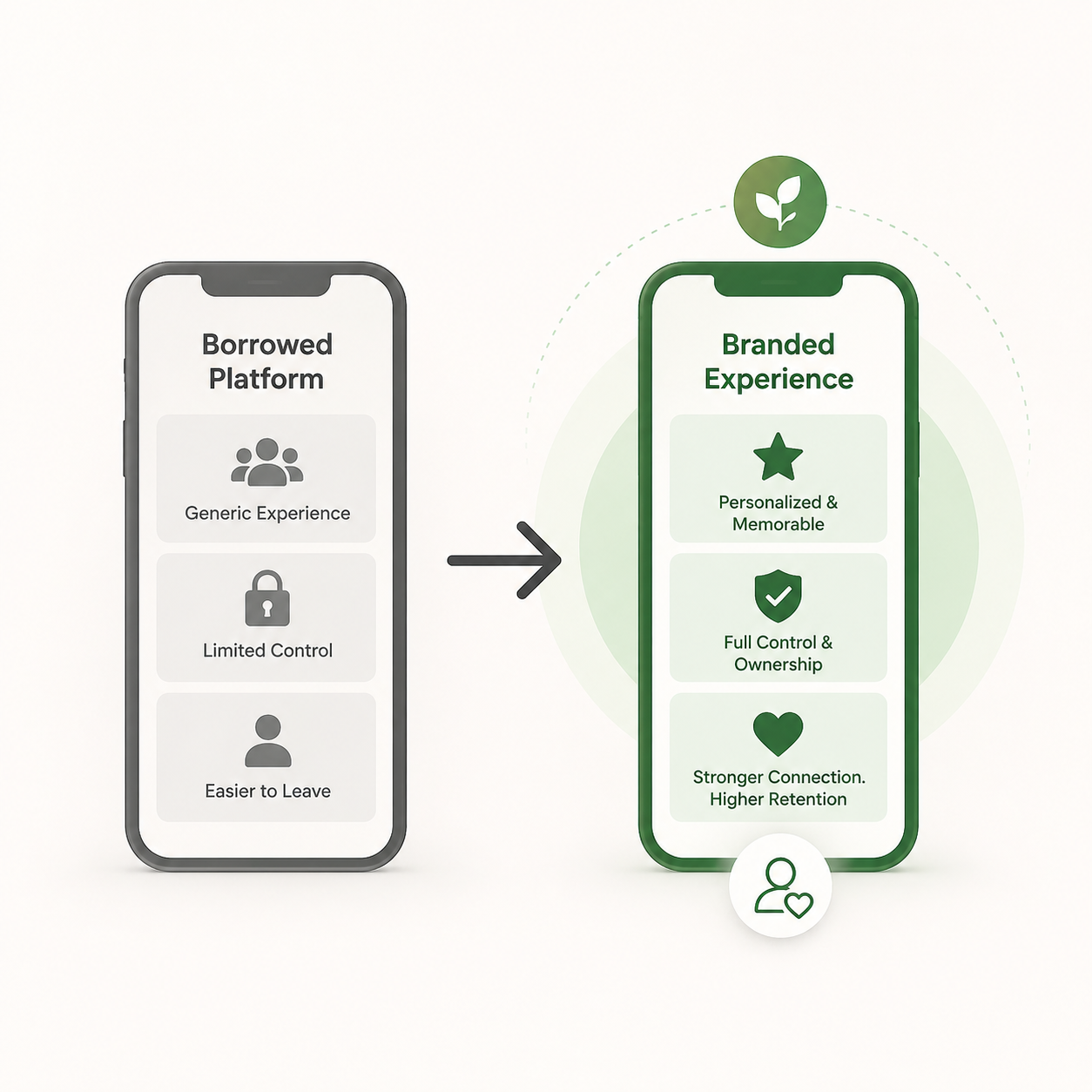
Reducing churn through personalized meal plans follows a five-stage framework. Each stage builds on the previous one, moving from understanding why clients leave to creating an experience they don't want to leave.
Stage 1: Diagnose — Identify where and why clients disengage from your current workflow.
Stage 2: Design — Structure personalized meal plans around client segments, not generic templates.
Stage 3: Deliver — Choose a delivery mechanism that creates daily branded touchpoints.
Stage 4: Deepen — Layer in engagement features (grocery list integration, cooking tutorials, progress signals) that increase switching costs.
Stage 5: Iterate — Use client behavior data to refine plans and catch at-risk clients before they churn.
These stages are sequential for initial setup but cyclical in practice. You'll return to the Diagnose and Iterate stages regularly as your client base grows.
Step-by-Step Breakdown: Building a Churn-Reduction System with Personalized Meal Plans
Step 1: Diagnose Your Churn Patterns
Objective: Identify the specific moments and reasons clients disengage, so you can target interventions precisely rather than guessing.
Start by mapping your client journey from signup to the point where engagement drops. For most nutrition professionals, there are predictable danger zones: the first two weeks (when novelty fades), the transition between an initial plan and ongoing guidance, and any point where the client has to leave your ecosystem to execute on your advice (searching for recipes elsewhere, building their own grocery list).
Survey recently churned clients with three simple questions: What was the most useful part of working with me? When did you start using my resources less frequently? What would have kept you engaged? The answers will cluster around themes. Common ones include: plans felt too generic, it was inconvenient to access recipes, or they found a "simpler" solution elsewhere.
Anti-patterns: Don't assume churn is about price. Nutrition professionals frequently lower prices in response to churn, which devalues their expertise without addressing the real issue. Don't rely solely on anecdotal feedback from your most engaged clients; they're the least likely to churn and the least representative of those who leave.
Success indicators: You can articulate the top three reasons clients leave, the average time-to-churn, and the specific touchpoints where engagement drops. This data becomes the foundation for everything that follows.
Step 2: Segment Clients and Design Personalized Meal Plans
Objective: Create meal plan structures that feel individually tailored without requiring you to build a unique plan for every single client.
Personalization at scale requires smart segmentation. Group your clients by the variables that most affect their meal planning needs: dietary goals (weight loss, muscle gain, managing a condition), dietary restrictions (allergies, plant-based, low-carb), cooking confidence, and household size. 41% of American recipe app users depend on apps for specific dietary goals like low-carb or plant-based meals, which confirms that segmentation along these lines matches real user behavior.
For each segment, build a base meal plan template that includes your best healthy recipes for that profile. Then add personalization layers: swappable ingredients, portion adjustments based on caloric targets, and alternative recipes for common dislikes. The client sees a plan that feels built for them. You see a scalable system built on reusable components.
Anti-patterns: Don't create a single "one-size-fits-all" plan and call it personalized. Clients recognize generic plans immediately, and it signals that you don't understand their specific situation. Also avoid over-segmenting to the point where you're maintaining dozens of plans you can't keep updated.
Success indicators: Each client segment has a dedicated meal plan template with at least three personalization variables. Clients report that plans feel relevant to their specific goals and constraints.
Step 3: Deliver Plans Through a Branded Experience You Own
Objective: Move meal plan delivery from static formats (PDFs, emails) or third-party platforms to a branded app that creates daily engagement habits tied to your name.
This is where the strategic angle of this guide converges with practical execution. Sharing healthy recipes through Instagram or embedding cooking tutorials on YouTube builds your visibility, but it doesn't build a retained client relationship. The moment a client follows your advice inside someone else's app, you've lost control of the experience.
A branded meal planning app changes the dynamic entirely. The client opens your app each morning to see their meal plan. They generate a grocery list with your branding. They watch your cooking tutorials inside your ecosystem. Every interaction reinforces that you are their nutrition professional, not a content creator they follow among dozens.
You don't need to build this from scratch. Platforms like Member Kitchens let nutrition professionals launch their own branded meal planning app without writing code, complete with automated shopping lists and customizable layouts. The point isn't the specific tool; it's the principle: own the platform where your clients interact with your plans daily.
If you're currently distributing plans as PDFs, the shift to an interactive app is significant. This case study on migrating from PDF meal plans to an interactive app illustrates the common pitfalls (and failed attempts with freelance developers) that professionals encounter before finding a workable solution.
Anti-patterns: Don't assume a social media presence substitutes for a branded app. Social platforms optimize for their engagement, not yours. Don't invest months building a custom app from scratch when no-code solutions exist that can launch in minutes.
Success indicators: Clients access their meal plans through an app that carries your branding. Daily or weekly active usage rates are measurable. You have direct access to client engagement data without depending on a third-party platform's analytics.
Step 4: Layer Engagement Features That Increase Switching Costs
Objective: Make your app so embedded in your clients' daily routines that switching to an alternative feels like a significant loss.
Switching costs aren't about locking clients in. They're about creating genuine value that accumulates over time. Every week a client uses your app, they build a history: saved favorite recipes, a library of grocery lists, progress toward their goals. That accumulated value makes leaving feel costly, not because you've trapped them, but because they'd lose something real.
Key features that build healthy switching costs include grocery list integration (clients rely on your app for their weekly shopping), a curated library of your cooking tutorials (clients learn your methods and ingredient preferences), progress tracking (clients can see their journey), and community features (clients connect with others following similar plans). 45% of recipe app users utilize nutritional breakdown tools, so including calorie and macro information alongside your recipes adds practical value that clients check regularly.
Think about frequency of interaction. A meal plan that clients check once a week creates weaker habits than a plan integrated with daily features: today's recipe, today's prep list, today's grocery reminder. 52% of recipe app users report weekly usage frequency, but your goal should be pushing that toward daily engagement.
Anti-patterns: Don't add features for their own sake. Every feature should answer the question: "Does this create a reason for the client to open the app today?" Avoid notification spam, which trains clients to ignore your app rather than engage with it.
Success indicators: Clients use at least three features regularly (meal plans, grocery lists, and one additional feature). Average session frequency is increasing over time. Clients mention specific app features in feedback unprompted.
Step 5: Use Behavior Data to Catch At-Risk Clients Early
Objective: Identify clients who are likely to churn before they actually cancel, and intervene with targeted re-engagement.
When you own the platform, you own the data. This is one of the most undervalued advantages of a branded app over third-party distribution. You can see which clients haven't opened the app in a week, which ones stopped generating grocery lists, and which ones are no longer completing their meal plans.
Build a simple early-warning system. Define your "engagement baseline" (the average usage pattern of a retained client) and flag anyone who drops below it for two consecutive weeks. Then create a re-engagement protocol: a personal check-in message, a refreshed meal plan that addresses potential boredom, or an invitation to a live cooking tutorial. The key is acting before the client has mentally checked out.
This is also where personalization cycles back. A client who stops engaging may need a plan adjustment, not a motivational email. Perhaps their dietary goals shifted, their schedule changed, or they're bored with the recipe rotation. Use the data to ask the right questions and update their plan accordingly.
Anti-patterns: Don't wait for cancellation requests to address churn. By the time a client cancels, the decision was made weeks ago. Don't send generic "we miss you" messages; they feel impersonal and contradict the personalized experience you've built.
Success indicators: You have a defined engagement threshold that triggers outreach. At-risk clients receive personalized interventions within one week of disengagement signals. Re-engagement rate (percentage of flagged clients who return to active usage) is tracked and improving.
Practical Examples: How This Looks in Practice
Scenario A: The Solo Dietitian Scaling Beyond 1-on-1
A registered dietitian with 30 individual clients creates personalized meal plans manually in spreadsheets and sends them as PDFs. Client retention averages four months. After segmenting clients into five dietary profiles and launching a branded app with meal plans, grocery list integration, and a library of short cooking tutorials, she scales to 150 subscribers. Retention extends to nine months on average because clients interact with her brand daily rather than reviewing a static PDF once a week.
The critical shift wasn't the app itself. It was moving from a document-delivery model to a daily-habit model. White label meal planning apps enhance this kind of engagement by letting the dietitian's brand stay front and center throughout the client experience.
Scenario B: The Fitness Coach Competing with Free Content
A fitness trainer shares healthy recipes on Instagram and links to a subscription meal plan service hosted on a third-party platform. Clients subscribe but churn after two months because the third-party platform surfaces competing creators' content. By moving to a branded recipe app, the trainer eliminates competitive noise. Clients see only his recipes, his cooking tutorials, and his meal plans. Churn drops by a third within one quarter because the environment reinforces a single relationship rather than fragmenting attention.
Scenario C: The Nutrition Coach Migrating from PDFs
A health coach runs a membership program with downloadable PDF meal plans. Engagement is low because PDFs are static and inconvenient on mobile. She migrates to an interactive app using a no-code platform like Member Kitchens, converting her existing recipe library into a searchable, filterable database with automated shopping lists. Optimizing features like dietary customization and grocery list integration increases weekly active usage from 20% of subscribers to over 55%.
Common Mistakes and Pitfalls
Treating the app as a content dump. Uploading hundreds of recipes without structure or personalization creates the same overwhelm clients experience on third-party platforms. Curation and personalization matter more than volume.
Neglecting onboarding.The first three days after a client downloads your app determine whether it becomes a habit or gets deleted. Guide new users through setting up their dietary profile, generating their first meal plan, and creating their first grocery list. Don't assume they'll explore on their own.
Ignoring the data you now have access to. Owning a branded app gives you engagement data that third-party platforms would never share. If you're not reviewing usage patterns monthly, you're wasting the biggest advantage of platform ownership.
Over-engineering before launching. Perfectionism delays launch. Start with your best 50 recipes organized into three client segments. You can expand after you've validated that clients engage with the format. Creating your own recipe app doesn't require a complete library on day one.
Competing on price instead of experience. When clients churn, the instinct is to lower subscription costs. This rarely works. Clients leave because the experience stopped feeling valuable, not because it stopped feeling affordable. Invest in personalization, not discounts.
What to Do Next
Start with the diagnosis. This week, identify your three most common churn triggers by reviewing client drop-off patterns and, if possible, surveying two or three recently churned clients. That information alone will clarify whether your primary issue is personalization, delivery format, engagement depth, or something else entirely.
From there, pick one step from this framework to implement over the next 30 days. If you're still sending PDF meal plans, the highest-impact move is migrating to an interactive, branded app. If you already have an app but churn persists, focus on segmentation and personalization layers.
This guide is meant to be revisited as your client base evolves. Retention isn't a one-time fix. It's an ongoing practice of understanding what your clients need, delivering it in a format that builds daily habits, and using data to refine the experience continuously. The professionals who treat their meal planning app as a living relationship tool, rather than a static product, are the ones who keep clients for years instead of months.
Frequently Asked Questions
What are the key features to include in a meal planning app?
The features that drive retention most effectively are personalized meal plans based on dietary profiles, automated grocery list integration, a searchable recipe database with nutritional breakdowns, and short cooking tutorials. Progress tracking and the ability to swap recipes within a plan also rank highly. Prioritize features that create daily usage habits over features that look impressive but get used once.
How can I reduce churn rates in my meal planning app?
Focus on three areas: personalization (plans that feel individually tailored), daily engagement hooks (grocery lists, daily recipe suggestions, prep reminders), and early intervention when usage drops. Monitor client activity weekly and reach out personally when someone's engagement falls below your baseline. Most churn is preventable if you catch disengagement signals within the first two weeks of decline.
How can I monetize my meal planning app effectively?
A subscription model works best for nutrition professionals because it aligns your revenue with ongoing client relationships. Offer tiered access: a base tier with weekly meal plans and grocery lists, and a premium tier with personalized plans, direct coaching access, and exclusive cooking tutorials. Avoid ad-supported models, which fragment attention and undermine the branded experience that reduces churn.
Why does owning a branded app matter more than using a third-party platform?
Third-party platforms control the client experience, the data, and the competitive environment. Your content appears alongside competing creators, and you have no visibility into how clients interact with your plans. A branded app gives you exclusive access to your clients' attention, direct engagement data, and a habit loop tied to your professional identity rather than a platform's brand.
When is the best time to launch a meal planning app?
The best time is when you have at least 20 to 30 active clients and a library of 40 to 50 tested recipes. You don't need a massive catalog to launch. Start with enough content to serve your primary client segments, and expand based on usage data and client feedback. Waiting for perfection costs you months of client engagement and retention.
Do I need technical skills to create a branded recipe app?
No. No-code platforms designed for nutrition professionals handle the technical infrastructure entirely. You focus on your recipes, meal plan structures, and client communication. The setup process for most no-code solutions takes minutes, not months, and includes customizable templates for layouts, branding, and feature configuration.
Sources
https://marksparksolutions.com/reports/us-recipe-apps-market
https://www.globalgrowthinsights.com/market-reports/recipe-apps-market-121500
https://www.marketgrowthreports.com/market-reports/recipe-apps-market-118867
https://www.memberkitchens.com/blog/pdf-meal-plans-to-interactive-app
https://www.memberkitchens.com/blog/maximizing-your-meal-planning-app-experience-tips-for-success
https://memberkitchens.com/updates/pdf-meal-plans-to-interactive-app