
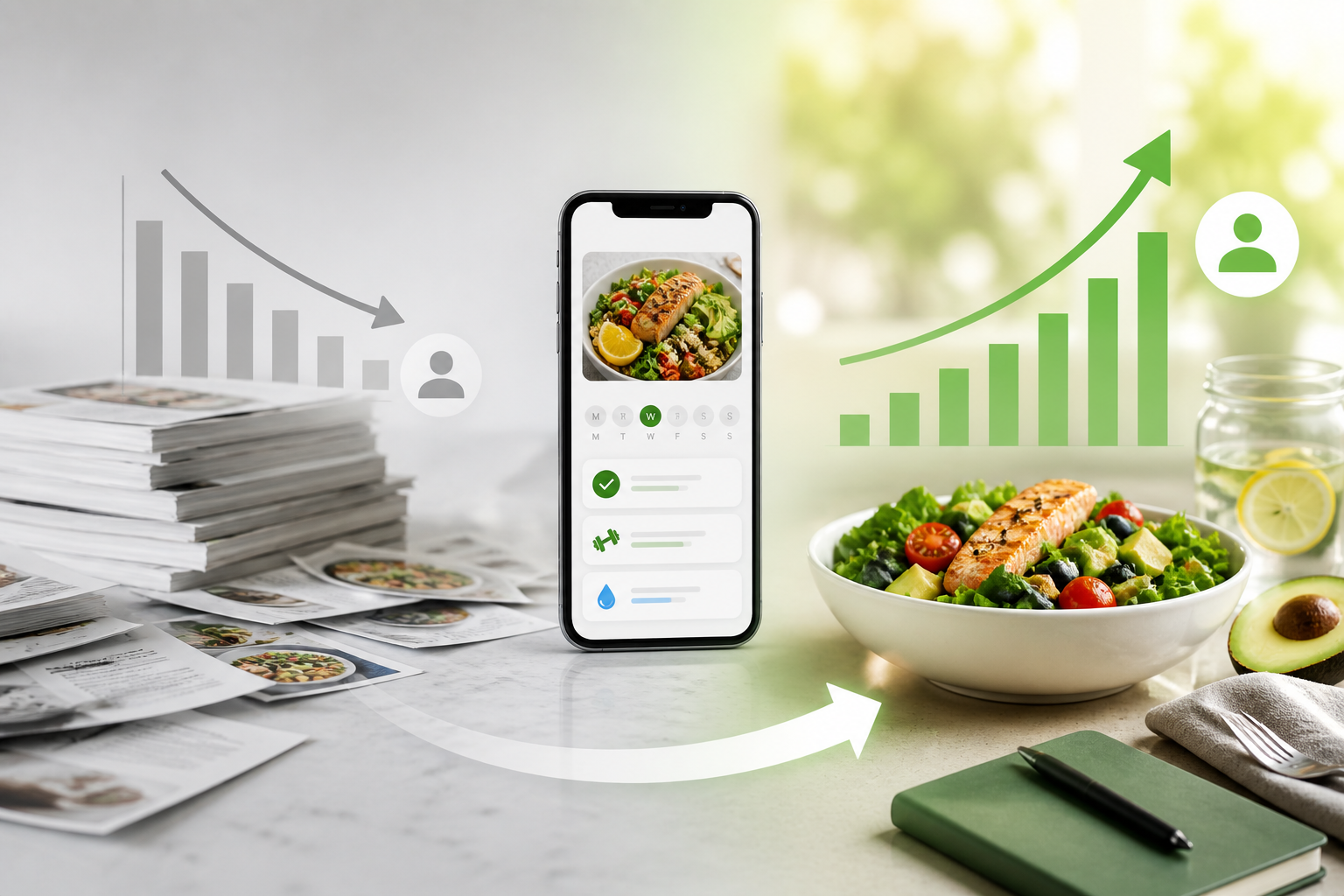
Nutrition professionals who build engagement tools instead of resource hubs unlock compounding recurring revenue
Learn why branded apps built as content libraries lose half their users within 90 days. In fact, research on mobile app retention shows the average app loses over 95% of its daily active users within 90 days of install. Discover how shifting to a daily engagement model transforms your user subscription model from a churn liability into a retention engine.
TL;DR
Content libraries don't retain subscribers - Static recipes and PDFs can't compete with free alternatives; clients need daily, personalized value to stay subscribed.
Personalized meal plans are a retention mechanism, not just a feature - Weekly refreshed plans, automated shopping lists, and goal-based customization turn your app into a daily habit instead of an occasional reference.
Retention is the real monetization strategy - With customer acquisition costs up 222% over the past decade, keeping existing subscribers is far more profitable than constantly replacing churned ones.
Think daily utility, not digital bookshelf - The question for every feature in your app should be "will this bring them back tomorrow?" not "is this valuable content?"
Your App Isn't Retaining Clients Because It Wasn't Built To
Here's a pattern we keep seeing: a nutrition professional launches a branded app, fills it with recipes and PDF guides, watches a burst of downloads, then quietly loses half those users within 90 days. The app looked right. The content was solid. But clients still churned. The problem wasn't quality. It was purpose. The app was built as a content library, not a daily engagement tool. And that distinction is the difference between a user subscription model that compounds and one that collapses.
The Content Library Trap
For years, the playbook for wellness professionals going digital has been straightforward: package your expertise into downloadable resources, put them behind a paywall, and call it a membership. It made sense. Clients wanted convenience, and practitioners wanted leverage. The meal plan PDF became the default product.
This approach worked when digital content felt scarce. Clients paid because access itself had value. But today, free meal plans saturate Instagram, Pinterest, and AI chatbots. The content library model hasn't become wrong, exactly. It's become commoditized. When your app competes on the same axis as a free Google search, your subscribers start asking a fair question: why am I still paying for this?
The Real Monetization Lever Is Daily Relevance
We believe the most effective monetization strategies for nutrition professionals aren't about pricing tiers or upsells. They're about engineering a product your client opens every single day. Subscriptions don't survive on content. They survive on daily relevance.
Why Personalized Meal Plans Change the Retention Math
Consider what happens when a client opens your app on a Tuesday morning. In the content library model, they browse, maybe save a recipe, and close the app. There's no urgency, no personalization, no reason to come back Wednesday.
Now consider the alternative. The client opens the app and sees a personalized meal plan for the week, built around their dietary needs, their preferences, and their goals. There's an automated shopping list synced to those meals. There's a new plan waiting next week. The app isn't a reference book. It's a daily companion.
This is the shift from resource delivery to value delivery. And the data backs it up. McKinsey's analysis of subscription models found that subscribers who perceive ongoing, curated value spend on average 2.5 times more than traditional non-subscription consumers. The key phrase there is "ongoing." Static content doesn't qualify.
Duolingo offers a useful parallel. Their subscription doesn't sell a language course you download once. It sells daily interactive lessons that adapt, refresh, and build streaks. Their family plan extends this engagement loop across households, boosting both acquisition and retention. The lesson for nutrition professionals: your app should feel more like a daily practice than a digital bookshelf. Duolingo's model proves this works: 37% of its monthly users open the app every single day, one of the highest DAU/MAU ratios in consumer software.
The economics reinforce this. Customer acquisition costs have surged by 222% over the last decade, climbing from $19 to $29 per user. When it costs that much to bring someone in, losing them after two months is financially devastating. The ideal LTV-to-CAC ratio for recurring revenue businesses is 3:1. You can't hit that ratio with a leaky bucket. Reducing churn isn't a nice-to-have. It's the entire business model.
Personalized meal plans attack churn at its root. They give the client a reason to return that's different every day. They create a sense of progression and care. And they make the subscription feel less like a charge and more like a service. That's how you turn a $9/month membership into a relationship that lasts years, not weeks.
Platforms like Member Kitchens make this shift practical by letting nutrition professionals launch branded meal planning apps with features like automated shopping lists and customizable plans, all without writing a line of code. The point isn't the technology. It's that the technology removes the excuse. You don't need a dev team to deliver daily value anymore.
What You're Really Competing Against
If personalized, refreshed meal plans are the retention mechanism, then ignoring this shift carries real cost. Every month a client stays subscribed because your app delivered relevant, personalized value is a month you didn't spend on acquisition. And with customer acquisition costs rising 60% in just the last five years, retention is no longer a secondary metric. It's the primary one.
The practitioners who figure this out will compound their revenue. Those who don't will keep cycling through new clients, spending more to replace the ones who quietly canceled. The gap between these two trajectories widens every quarter.
If you're unsure whether your current approach is converting, it's worth diagnosing why subscribers aren't signing up or staying. The answers are usually structural, not promotional.
Stop Thinking "Content Product." Start Thinking "Daily Utility."
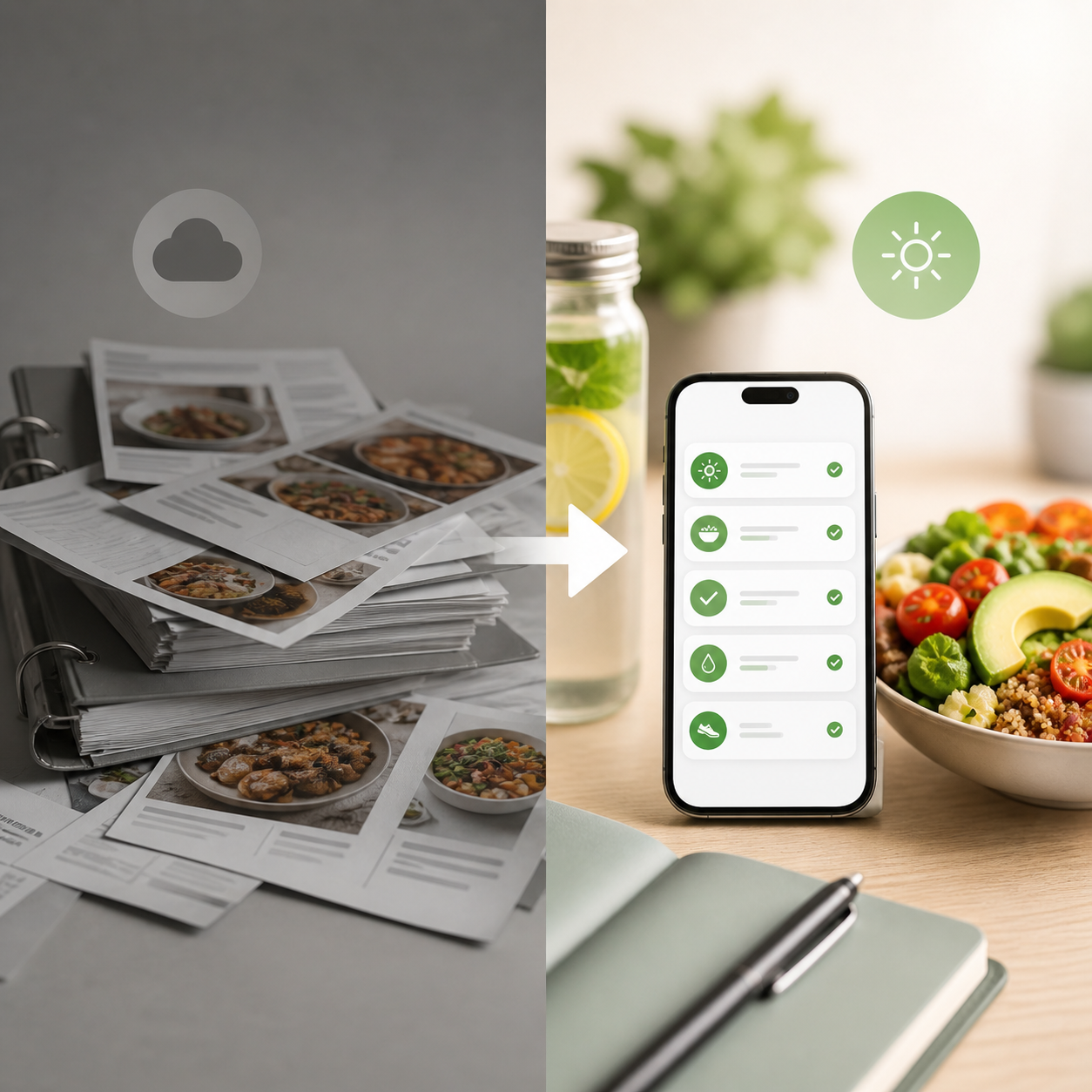
Here's the reframe: your app shouldn't be a library your clients visit. It should be a kitchen counter they stand at every day. Libraries are optional. Kitchen counters are habitual.
When you build your subscription around daily utility (personalized plans, synced grocery lists, weekly refreshes) you stop competing with free content online. You start competing with the client's own inertia. And inertia, once it's working in your favor, is the most powerful retention tool that exists. The question to ask about every feature in your app isn't "is this valuable?" It's "will this bring them back tomorrow?"
The Subscription That Earns Its Renewal
We don't think nutrition professionals have a pricing problem. We think they have a daily value problem. Fix what the client experiences on an average Tuesday, and the subscription model stops feeling like a billing arrangement. It starts feeling like something they'd miss if it disappeared. That's the only kind of subscription that lasts.
Frequently Asked Questions
How can I reduce churn rates in my meal planning app?
Focus on delivering personalized, refreshed content that gives subscribers a reason to open the app daily. Static recipe libraries lose to free alternatives; dynamic meal plans, automated shopping lists, and weekly updates create habitual engagement that sustains subscriptions.
Why is customer acquisition cost important for a meal planning app?
With acquisition costs rising over 200% in the last decade, every subscriber you lose forces expensive re-acquisition. A strong retention strategy (targeting an LTV-to-CAC ratio of at least 3:1) turns your existing user base into compounding revenue rather than a revolving door.
Which pricing strategy should I choose for my meal planning app?
Pricing matters less than perceived daily value. Before optimizing price points, ensure your app delivers enough ongoing utility to justify any recurring charge. For practical guidance on ranges and testing, explore how much to charge for a meal planning membership.
Sources
https://www.simplicitydx.com/blogs/customer-acquisition-crisis
https://www.businessofapps.com/marketplace/user-acquisition/research/user-acquisition-costs/
https://recurly.com/content/subscription-customer-acquisition/
https://memberkitchens.com/blog/why-aren-t-people-subscribing-to-my-meal-plan-service
https://memberkitchens.com/blog/how-much-should-you-charge-for-a-meal-planning-membership