
Practical user acquisition strategies that fill your app with paying subscribers without draining your budget
Learn how to calculate, benchmark, and reduce your customer acquisition cost when growing a meal planning app. This guide covers organic growth channels, conversion funnel optimization, and smarter budget allocation.
TL;DR
Start with your existing audience — Your followers and email subscribers are your cheapest acquisition channel. Exhaust this source before spending on ads, and you can acquire your first paying users for under $5 each.
Fix your conversion funnel before scaling traffic — A trial-to-paid conversion rate above 70% effectively cuts your CAC on every user who enters the funnel. Optimize onboarding to deliver value within 48 hours of signup.
Build organic content loops that compound — SEO-driven blog posts, short-form video, and referral mechanics create acquisition channels with near-zero marginal cost. Aim for organic to drive 30-50% of signups within six months.
Use paid ads as amplification, not foundation — Boost your best-performing organic content and retarget warm audiences. Set strict CAC ceilings and kill underperforming campaigns quickly. Benchmark your blended CAC against the $13-$15 industry target.
Retention reduces effective CAC — Every additional month a subscriber stays makes your original acquisition spend more efficient. Prioritize content freshness, personalization, and habit-building features to keep churn below 10% monthly.
Guide Orientation: What This Covers and Who It's For
This guide walks you through practical user acquisition strategies that lower your customer acquisition cost when launching and growing a meal planning app. It's written for food content creators, influencers, and bloggers who want to turn their audience into paying subscribers without draining their budget on traditional advertising.
By the end, you'll understand how to calculate and benchmark your acquisition costs, build organic growth channels that compound over time, optimize your conversion funnel from free trial to paid user, and make smarter decisions about where every marketing dollar goes.
This guide does not cover app development or coding. It assumes you already have (or plan to launch) a meal planning app and need to fill it with paying users efficiently. If you're still exploring how to build one, start with this guide on making a meal planning app without coding.
Why Customer Acquisition Cost Matters for Your Meal Planning App
The economics of a subscription-based meal planning app live or die by one number: how much it costs to acquire each paying user. Customer acquisition costs across apps have surged 222% over the last decade, climbing from $19 to $29 per user. For food creators operating without venture capital, that trajectory is unsustainable if you rely solely on paid channels.
Here's the core tension. Your customer lifetime value (LTV) must exceed your customer acquisition cost (CAC) by a healthy margin, or growth actually accelerates your losses. A meal planning app charging $9.99 per month needs subscribers to stick around for months before you recoup even a modest acquisition spend. If your CAC is $30 and your average subscriber churns after two months, you're losing money on every user you bring in.
The opportunity for food content creators is significant. You already have an audience, a brand, and trust. Most app companies spend heavily to build what you already own. The challenge is converting that existing attention into app downloads and paid subscriptions without the wasteful spending that plagues companies starting from zero. This guide gives you the framework to convert that attention into revenue.
Ignoring CAC doesn't make it disappear. It just means you're spending without measuring, which is the most expensive approach of all.
Core Concepts: The Numbers You Need to Know
Customer Acquisition Cost (CAC)
CAC is the total amount you spend to acquire one paying customer. This includes advertising, content production, tools, and any labor you dedicate to marketing. The formula is simple: divide your total marketing spend by the number of new paying customers you acquired in that period.
Projected CAC for a meal planning app is approximately $15 per user when blending paid and organic strategies. That benchmark assumes a $150,000 annual marketing budget acquiring 10,000 paying users. Your numbers will differ, but the ratio matters more than the absolute figure.
Cost Per Install (CPI) vs. CAC
CPI measures what you pay for a single app download. The US average CPI for apps sits between $2.50 and $5.00, with shopping-adjacent categories averaging $4.74. But an install is not a customer. CPI tracks the top of your funnel. CAC tracks the bottom. Most creators lose money in the gap between them.
Customer Lifetime Value (LTV)
LTV is the total revenue a subscriber generates before they cancel. For a subscription-based meal planning app, you calculate it by multiplying average monthly revenue per user by average subscriber lifespan in months. Your LTV-to-CAC ratio should be at least 3:1 to sustain growth.
Trial-to-Paid Conversion Rate
This is the percentage of free trial users who become paying subscribers. It's the single most leverageable metric in your funnel. Improving conversion from 60% to 80% effectively cuts your CAC by 25% without spending an additional dollar on marketing. Every optimization in this guide ultimately feeds this number.
The Framework: Four Phases of Efficient User Acquisition
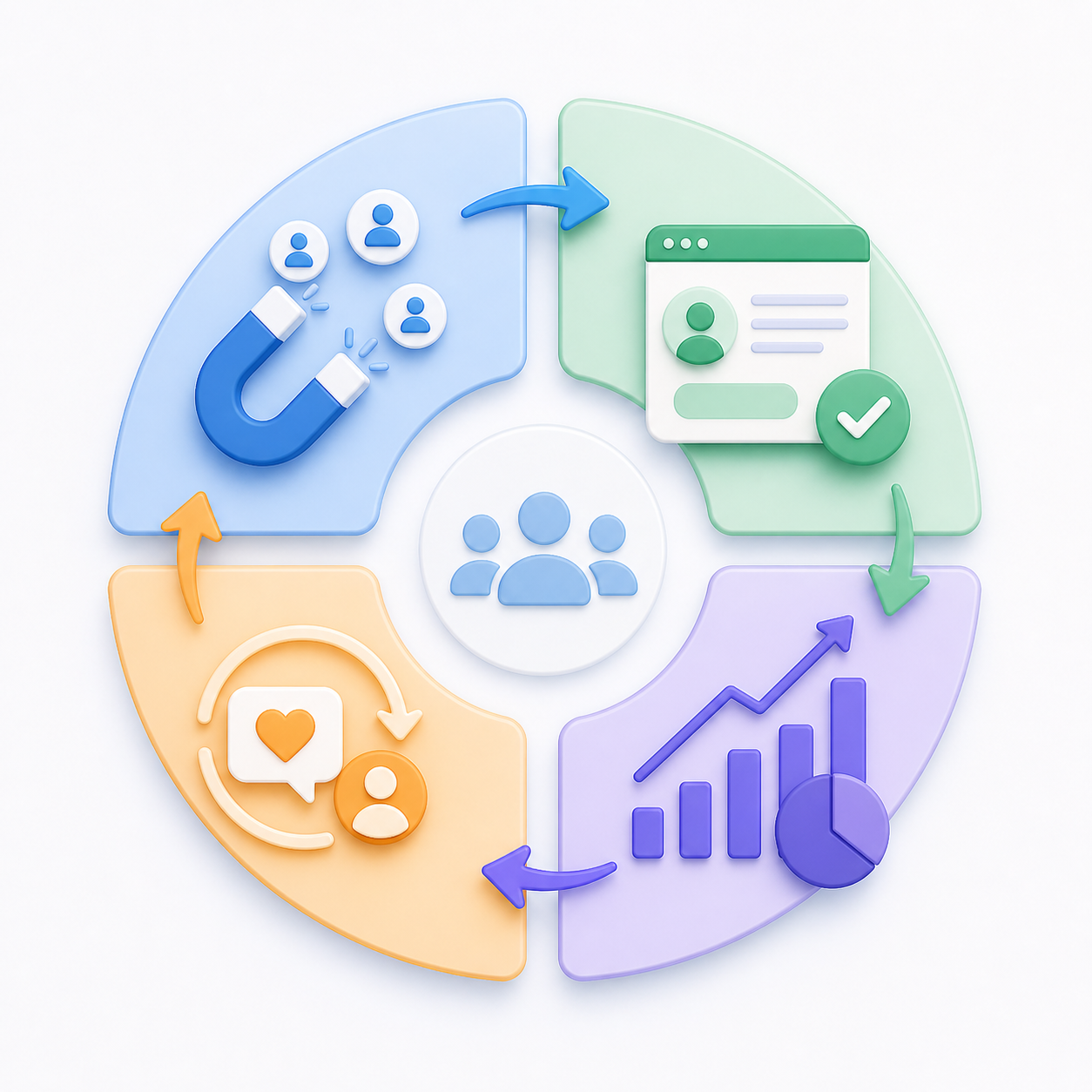
Lowering CAC isn't a single tactic. It's a system built across four interconnected phases. Each phase reduces your dependence on paid acquisition while increasing the value of every user who enters your funnel.
Phase 1: Audience Foundation — Leverage the community and trust you've already built
Phase 2: Conversion Architecture — Design your trial experience and onboarding to maximize paid conversions
Phase 3: Organic Growth Engines — Build content and referral systems that acquire users without per-click costs
Phase 4: Strategic Paid Amplification — Use paid channels selectively to accelerate what's already working organically
These phases are sequential for initial setup but run in parallel once established. The output of each phase feeds the next, creating a compounding effect that drives CAC down over time rather than up.
Step-by-Step Breakdown: Lowering Your Customer Acquisition Cost
Step 1: Audit and Activate Your Existing Audience
Objective: Convert your current followers, email subscribers, and community members into your first wave of app users at near-zero acquisition cost.
Your existing audience is the most undervalued asset in your acquisition strategy. Every follower on Instagram, every email subscriber, every blog reader represents a potential customer you've already "acquired" through months or years of content creation. The cost to convert them is a fraction of acquiring a stranger through paid ads.
Start by mapping your audience across channels. Count your email list, social followers, blog traffic, YouTube subscribers, and any community groups you manage. Then segment by engagement level. Someone who opens every email is a different prospect than a dormant follower. Your highest-engagement segment is your launch cohort.
Create a dedicated launch sequence for each channel. Send your email list a 3-part series: announcement, value proposition with a preview of what's inside the app, and a limited-time trial offer. Social platforms get teaser content showing the app in action. The key is framing the app as the natural next step in the relationship you've already built, not as a sales pitch from a stranger.
Anti-patterns: Don't blast a single promotional post and call it a launch. Don't assume your audience understands what a meal planning app does for them. Don't skip the explanation of why this is different from the free content you already provide.
Success indicators: Your first 100-500 users should come almost entirely from your existing audience. If you're spending money on ads before exhausting this channel, you're leaving the cheapest conversions on the table.
Step 2: Engineer Your Trial-to-Paid Conversion Funnel
Objective: Achieve a trial-to-paid conversion rate above 70%, which directly reduces your effective CAC on every user who enters the funnel.
The distance between a free trial signup and a paid subscription is where most meal planning apps hemorrhage money.
Your trial period should deliver a complete "aha moment" within the first 48 hours. For a meal planning app, that means the user generates their first weekly meal plan, sees an automated shopping list, and experiences at least one recipe they're genuinely excited to cook. If those three things happen in the first two days, the psychological switch from "trying" to "using" flips.
Structure your trial around guided actions, not passive access. Send daily prompts during the trial: "Your meal plan for Monday is ready" or "Here's your shopping list for the week." Each touchpoint reinforces the app's value and builds the habit loop that makes cancellation feel like a loss rather than a neutral decision.
If you're wondering why subscribers aren't converting, the answer is usually in the trial experience, not the marketing. Fix the onboarding before scaling acquisition.
Anti-patterns: Offering a trial with no guidance and hoping users explore on their own. Making the trial too long (beyond 14 days), which delays the commitment decision and increases drop-off. Burying premium features behind the paywall during the trial, which prevents users from seeing full value.
Success indicators: Track daily active usage during the trial period. Users who engage on 5 or more of their first 7 days convert at dramatically higher rates. If trial engagement is below 40% daily active, your onboarding needs work before you invest in more top-of-funnel traffic.
Step 3: Build Organic Content Loops That Acquire Users for Free
Objective: Create content systems that generate app signups without per-click costs, driving your blended CAC down as organic volume grows.
Paid acquisition has a linear cost curve: more users, more spend. Organic content has a logarithmic one: the investment is front-loaded, but returns compound. For food content creators, this is your structural advantage. You already know how to create content people want to consume.
The strategy is to create content that solves a specific problem, delivers partial value, and positions the app as the complete solution. A blog post titled "5 High-Protein Meal Prep Ideas for Busy Weeknights" delivers immediate value. The call-to-action at the end offers the full week's plan, with shopping list and nutritional breakdowns, inside the app. Your content drives the top of the funnel. Your app delivers the product.
Invest in three content formats that drive the highest-intent traffic: SEO-optimized blog posts targeting long-tail queries ("easy meal prep for weight loss" or "weekly meal plan for families"), short-form video showing meal prep in action with app screenshots, and email newsletters that deliver one free recipe per week with a teaser of what's available inside the app.
Referral mechanics amplify organic reach further. Give existing subscribers a shareable link that rewards both the referrer and the new user. Even a simple "share your meal plan with a friend" feature inside the app turns every active user into a distribution channel.
Anti-patterns: Creating content that doesn't connect to the app. Publishing without a clear conversion path. Expecting organic results in weeks instead of months. Neglecting SEO fundamentals like keyword targeting and internal linking.
Success indicators: Within 3-6 months, organic channels should account for 30-50% of new trial signups. Track the source of every signup. If 90%+ of users still come from paid channels after six months, your content strategy needs recalibration.
Step 4: Use Influencer and Community Partnerships Strategically
Objective: Acquire users through trusted third-party endorsements at a lower effective CAC than direct paid advertising.
Influencer partnerships work differently for meal planning apps than for most products. You're not selling a one-time purchase. You're selling a subscription that requires trust. That means micro-influencers with engaged, niche audiences (5,000-50,000 followers in fitness, nutrition, or cooking) consistently outperform macro-influencers on a cost-per-acquisition basis.
Structure partnerships around revenue share rather than flat fees when possible. Offer partners a percentage of subscription revenue from users they refer, tracked through unique links or promo codes. This aligns incentives: they earn more by driving quality users who actually stay subscribed, not just clicks. It also shifts your acquisition cost from fixed to variable, which protects your budget.
Community partnerships extend beyond individual influencers. Facebook groups focused on meal prep, Reddit communities around nutrition, and local fitness studio networks all represent concentrated audiences with high intent. Provide value first (free resources, expert Q&As, guest content) before promoting the app.
For creators who want to offer partners their own branded version of the app, platforms like Member Kitchens allow you to launch white-label meal planning apps that partners can customize and promote under their own brand, effectively turning collaborators into co-distributors.
Anti-patterns: Paying large upfront fees to influencers without performance tracking. Partnering with creators whose audience doesn't match your target demographic. Treating partnerships as one-off campaigns instead of ongoing relationships.
Success indicators: Partner-referred users should have a CAC at least 30% lower than your paid advertising CAC. Track not just signups but 90-day retention for partner-sourced users. High-quality partnerships drive users who stay, not just users who try.
Step 5: Implement Paid Acquisition as Amplification, Not Foundation
Objective: Use paid channels to scale what's already proven organically, maintaining a blended CAC that supports profitability.
Paid advertising is a tool, not a strategy. The mistake most app creators make is starting with paid ads before they've validated their conversion funnel. Initial marketing costs for meal planning apps range from $5,000 to $50,000+ in the launch phase. Spending that before you optimize your trial-to-paid conversion is burning money.
Once your organic channels are generating consistent signups and your conversion rate is stable above 65%, paid ads become a multiplier. Start with retargeting campaigns that reach people who've already visited your website or engaged with your content but haven't signed up. These warm audiences convert at 3-5x the rate of cold traffic, keeping your paid CAC manageable.
For cold acquisition, social media ads on Instagram and TikTok perform well for meal planning apps because the content format (short recipe videos, meal prep timelapses) is native to the platform. Your best-performing organic content tells you exactly what to promote. Don't create separate ad content. Boost what's already resonating.
Set strict CAC ceilings by channel. If your LTV is $60, your maximum allowable CAC should be $20. Kill any campaign that exceeds your ceiling for two consecutive weeks.
Anti-patterns: Scaling ad spend before optimizing conversion. Running ads without clear attribution tracking. Letting "brand awareness" justify campaigns with no measurable signup outcome. Competing on ad spend with venture-backed companies like HelloFresh.
Success indicators: Your blended CAC (total marketing spend divided by total new paying users from all channels) should decrease quarter over quarter as organic volume grows. Paid channels should deliver a minimum 3:1 return on ad spend within 90 days of a user's signup.
Step 6: Optimize Retention to Reduce Effective Acquisition Cost
Objective: Increase customer lifetime value through retention improvements, which mathematically reduces the CAC you can afford and still profit.
Retention is acquisition's quieter, more powerful sibling. Every month a subscriber stays, your effective acquisition cost per revenue dollar decreases. A user acquired for $15 who stays for 12 months costs you $1.25 per month of revenue. The same user who churns after 2 months costs $7.50 per month. Retention doesn't just protect revenue. It retroactively makes your acquisition spending more efficient.
For meal planning apps, three primary factors drive churn: content fatigue (running out of new recipes), lack of personalization (plans that don't adapt to preferences), and forgotten usage (the app becomes invisible in the user's routine). Address each one systematically.
Content freshness means adding new recipes and meal plans on a predictable schedule. Weekly additions give users a reason to open the app regularly. Personalization means the app learns from user behavior: dietary preferences, cooking skill level, household size, and ingredient availability. Habit reinforcement means push notifications timed to when users typically plan meals or shop for groceries.
Member Kitchens addresses several of these retention levers through features like automated shopping lists and expert-designed layouts that keep the user experience polished without requiring you to build custom technology.
Anti-patterns: Focusing exclusively on new user acquisition while ignoring churn. Assuming subscribers will find value on their own without ongoing engagement. Treating retention as a customer support problem instead of a product design challenge.
Success indicators: Track monthly churn rate and 90-day retention. A healthy meal planning app retains 60%+ of users at the 90-day mark. If your 30-day churn exceeds 20%, pause acquisition spending and fix the product experience first.
Practical Examples: Putting the Framework Into Action
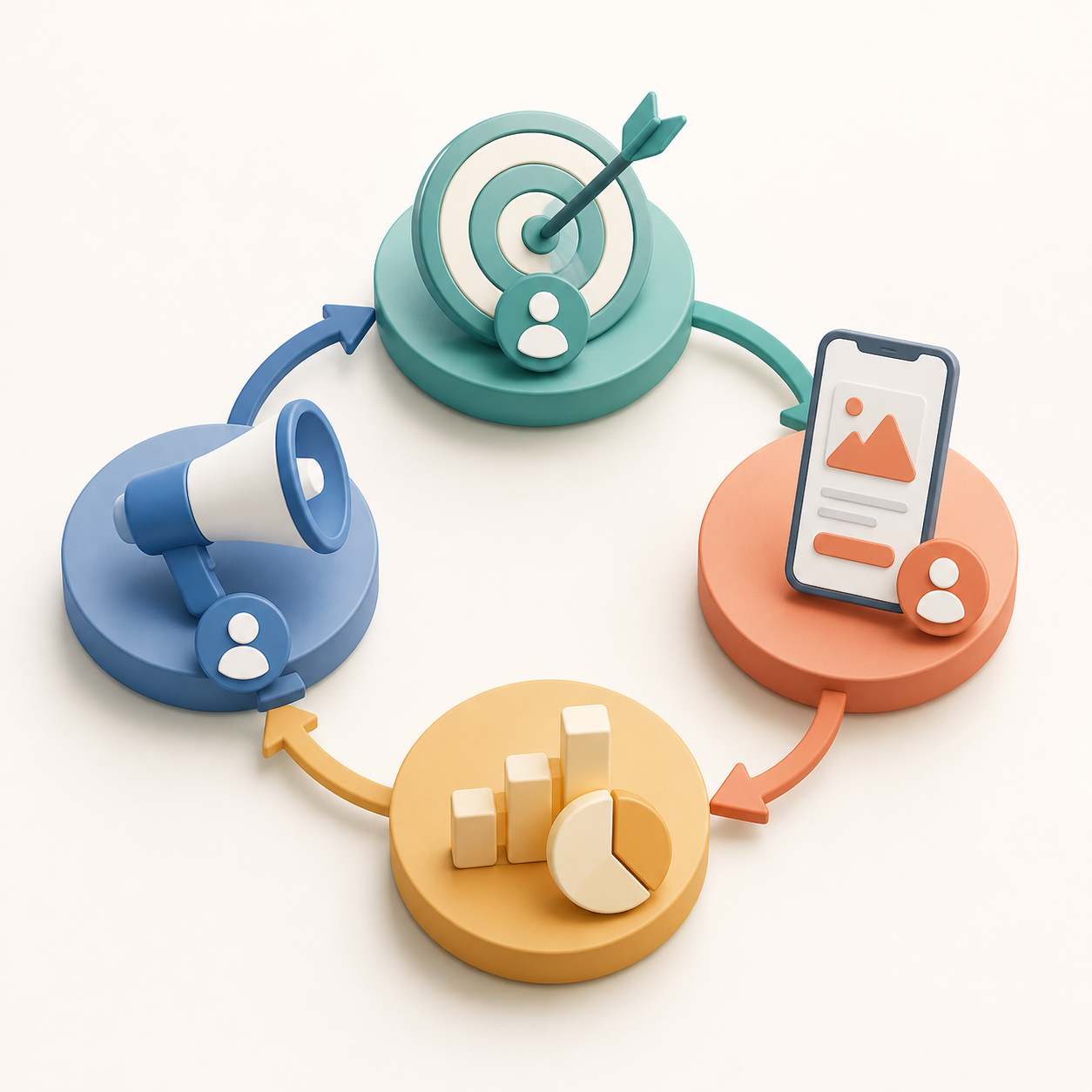
Scenario: A Food Blogger With 25,000 Instagram Followers
A food blogger with a moderately engaged Instagram audience and a 3,000-person email list decides to launch a branded meal planning app. Instead of spending on ads immediately, she announces the app exclusively to her email list with a 14-day free trial. The first week generates 400 trial signups at zero acquisition cost.
She creates a 5-part Instagram Reels series showing her using the app to plan a week of meals, shop from the automated grocery list, and cook three of the recipes. Each Reel ends with a swipe-up to the trial signup. Over two weeks, the series generates another 600 trial signups organically.
Of the 1,000 total trial users, 720 convert to paid subscribers at $9.99/month. Her effective CAC for this launch cohort is under $2 per user (accounting only for the time spent creating content). She then allocates $500/month to Instagram ads promoting her best-performing Reel, acquiring an additional 80 paid users per month at a $6.25 paid CAC. Her blended CAC across all channels sits at approximately $3.50.
Scenario: A Fitness Coach Partnering With Other Trainers
A fitness coach launches a meal planning app and recruits five personal trainer colleagues as affiliate partners. Each partner gets a unique referral link and earns 20% of subscription revenue from users they refer. The partners promote the app to their combined client base of 2,000 people.
Over three months, the partners drive 300 trial signups, of which 210 convert to paid. The coach's only cost is the 20% revenue share, which on a $9.99 subscription equals $2.00 per user per month. The effective CAC is $0 upfront, with ongoing variable cost tied to revenue. This model scales with zero budget risk.
Common Mistakes and Pitfalls
The most expensive mistake is treating user acquisition as a spending problem rather than a conversion problem. Doubling your ad budget with a 40% trial-to-paid conversion rate just doubles your waste. Fix the funnel first.
Many creators also underestimate the timeline for organic growth. Content marketing and SEO take 3-6 months to generate meaningful traffic. Giving up at month two and shifting entirely to paid ads is a common, costly pattern.
Another frequent error is failing to track CAC by channel. If you don't know whether Instagram ads or email marketing drives cheaper conversions, you can't allocate budget intelligently. Attribution isn't optional. It's the foundation of every decision in this guide.
Finally, neglecting retention while chasing new users is like filling a leaking bucket. Choosing the right platform foundation matters because it determines whether your app can deliver the ongoing experience that keeps subscribers paying month after month.
What to Do Next
Start with one action: calculate your current CAC. If you haven't launched yet, model it. Take your planned marketing budget for the first three months, estimate your trial signups and conversion rate, and see what number you get. Compare it against the $13-$15 benchmarks referenced in this guide.
If the number is too high, work backward through the steps. Can you activate more of your existing audience? Can you improve your trial experience? Can you build one organic content loop that generates signups without ad spend?
Revisit this guide quarterly as your app grows. The strategies that matter most shift as your user base scales. Early on, audience activation and conversion optimization deliver the biggest returns. Later, organic content and partnerships become the primary growth engines. Paid amplification comes last, not first.
Progress is incremental. Lower your CAC by 10% this quarter, then another 10% next quarter. Compounded over a year, that transforms the economics of your entire business.
Frequently Asked Questions
What are the key steps to launch a meal planning SaaS app?
The essential steps include defining your target audience, choosing your platform (no-code solutions like Member Kitchens can eliminate development costs), setting your pricing tiers, activating your existing audience for initial users, and building a conversion-optimized trial experience. Most creators overcomplicate the technical side and underprepare the marketing side. Focus on getting your first 100 paying users from your existing community before investing in broader acquisition.
How much does it cost to acquire a user for a meal planning app?
Benchmarks vary by channel and strategy. The US average cost per install ranges from $2.50 to $5.00, but an install isn't a paying customer. Projected CAC for a meal planning app blending paid and organic strategies is approximately $13-$15 per paying user. Creators with existing audiences can achieve significantly lower CAC by converting followers and email subscribers first, often under $5 per paying user in early cohorts.
Why is it important to define product tiers and pricing before launching?
Your pricing determines your customer lifetime value, which sets the ceiling for how much you can spend on acquisition. If you price at $4.99/month, your maximum sustainable CAC is roughly $15 (assuming a 3:1 LTV-to-CAC ratio and 9-month average retention). At $14.99/month, that ceiling rises to $45. Pricing decisions made before launch directly shape which acquisition strategies are viable.
How can I optimize the trial-to-paid conversion rate for my meal planning app?
Deliver a complete value experience within 48 hours of signup. This means the user should generate a meal plan, see an automated shopping list, and find at least one recipe they're excited about. Send daily engagement prompts during the trial. Keep the trial period between 7-14 days to create urgency without rushing. Track daily active usage during the trial, as users active on 5+ of their first 7 days convert at the highest rates.
Which metrics should I monitor to ensure my meal planning app is on track?
Track five core metrics: customer acquisition cost (CAC) by channel, trial-to-paid conversion rate, monthly churn rate, customer lifetime value (LTV), and the LTV-to-CAC ratio. Your LTV-to-CAC ratio should be at least 3:1. Monthly churn should stay below 10%. Trial-to-paid conversion should exceed 65%. Review these monthly and adjust your acquisition strategy based on which channels deliver the best ratios.
When should I implement a performance marketing strategy for my meal planning app?
Only after you optimize your conversion funnel. Specifically, wait until your trial-to-paid conversion rate is stable above 65% and you've exhausted your lowest-cost channels (existing audience, organic content, partnerships). Paid advertising should amplify proven performance, not compensate for a broken funnel. For most creators, this means paid ads enter the strategy 2-4 months after launch, not on day one.
Sources
https://memberkitchens.com/blog/how-to-make-a-meal-planning-app-without-coding
https://www.businessofapps.com/marketplace/user-acquisition/research/user-acquisition-costs/
https://financialmodelslab.com/blogs/startup-costs/nutritionist-meal-planning-app
https://www.statista.com/statistics/1021316/mobile-shopping-app-cost-to-install-costs-region/
https://memberkitchens.com/blog/why-aren-t-people-subscribing-to-my-meal-plan-service
https://appinventiv.com/blog/hellofresh-app-development-cost/