
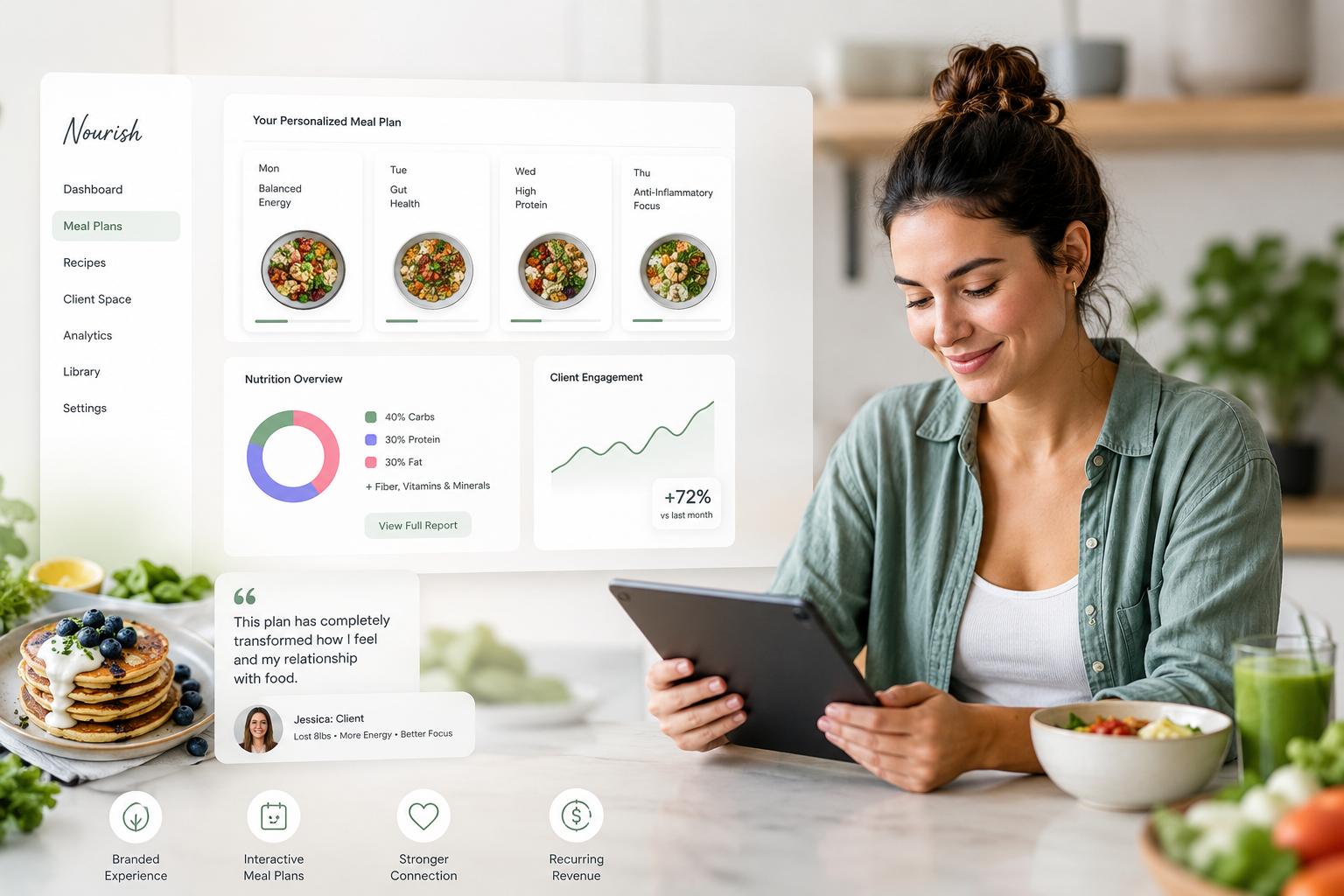
How food creators and wellness influencers can use meal planning SaaS to build authority and unlock new revenue
Learn how to use nutrition software as a strategic differentiator, not just a productivity tool. This guide walks you through building branded, interactive experiences that deepen audience loyalty and create defensible revenue streams.
TL;DR
Authority comes from products, not just content — In a saturated market, a branded meal planning app differentiates you far more than publishing more recipes on the same platforms as everyone else.
Nutrition software is a brand asset, not just a tool — The diet and nutrition apps market is growing at 13.4% annually. Using meal planning SaaS strategically lets you offer an interactive, premium experience under your own brand.
Start with audience needs, not assumptions — Audit your audience's actual struggles with meal planning before designing your product. Specificity ("30-minute gluten-free family dinners") beats generality every time.
Skip custom development — White-label, no-code platforms let you launch a branded app in days instead of months, without the $30K+ price tag of custom builds.
Build a content flywheel — Your free content drives discovery, your product delivers the full experience, and subscriber data fuels better content. This loop compounds your authority over time.
Guide Orientation: What This Covers and Who It's For
This guide is for food content creators, nutrition influencers, and wellness bloggers who feel the pressure of operating in a crowded market. If you're struggling to stand out, retain followers, or monetize your expertise beyond sponsorships and ad revenue, this is for you.
We'll walk through a concrete framework for building authority using nutrition software as a strategic differentiator, not just a productivity tool. You'll learn how to move from generic content creation to offering branded, interactive experiences that deepen audience loyalty and open new revenue streams.
This guide does not cover technical software comparisons or feature-by-feature breakdowns. Instead, it focuses on strategic positioning: how to use meal planning technology to create something your competitors can't easily replicate. By the end, you'll have a clear method for elevating your brand from "another food account" to a recognized authority with a defensible digital product.
Why Building Authority with Nutrition Software Matters Now
The food and wellness content space has never been more competitive. Every platform is flooded with recipe reels, macro breakdowns, and "what I eat in a day" posts. The barrier to entry is essentially zero, which means the barrier to standing out is higher than ever.
Meanwhile, audience expectations have shifted. Followers don't just want inspiration. They want actionable tools: custom meal plans, organized shopping lists, and structured programs they can follow. Creators who only offer static content (blog posts, PDFs, social media posts) are increasingly losing engagement to those who deliver interactive, personalized experiences. In fact, HubSpot research shows that personalized calls-to-action convert 202% better than generic ones — a gap that only widens as audience expectations grow.
The numbers reinforce this shift. The diet and nutrition apps market reached $2.14 billion in 2024 and is projected to hit $4.56 billion by 2030, growing at a 13.4% CAGR. This isn't a niche trend. It's a structural change in how people consume nutrition guidance. North America alone accounts for 36.4% of that market, driven by smartphone penetration exceeding 82%.
The cost of inaction is tangible. Creators who rely solely on traditional content formats risk commoditization. When every competitor can post the same type of content, your brand becomes interchangeable. Nutrition software gives you the infrastructure to offer something structurally different: a branded product that lives on your audience's phone, not just in their feed.
Core Concepts: Authority, Differentiation, and the Product-Content Gap
What "Authority" Actually Means in a Saturated Market
Authority isn't follower count. It's the degree to which your audience trusts your guidance enough to act on it, and ideally, pay for it. In saturated markets, authority is built through depth, consistency, and the quality of the experience you provide, not just the volume of content you produce.
The Product-Content Gap
Most food creators operate in "content mode": they publish recipes, share tips, and hope the algorithm rewards them. A smaller group operates in "product mode": they package their expertise into structured offerings (meal plans, programs, apps) that deliver ongoing value. The gap between these two modes is where differentiation lives.
Static PDFs and blog posts are content. A branded meal planning app with automated shopping lists, organized weekly plans, and interactive features is a product. Products command higher perceived value, generate recurring revenue, and create switching costs that keep your audience engaged.
Why Nutrition Software Is the Leverage Point
Meal planning SaaS platforms have matured to the point where you no longer need a development team or a six-figure budget to launch a branded digital product. The nutrition analysis software market is valued at $1.25 billion in 2025 and growing at over 10% annually, which means the tools available to creators are improving rapidly.
The key distinction: nutrition software isn't just a backend efficiency tool. It's a front-end brand asset. When used strategically, it becomes the vehicle through which your audience experiences your expertise, not just reads about it.
Common Misconception: "I Need to Be a Dietitian"
You don't need clinical credentials to use meal planning software effectively. Many successful creators curate and organize recipes, structure weekly plans around themes (high protein, plant-based, budget-friendly), and collaborate with credentialed professionals for nutritional accuracy. The software handles the complexity. Your brand provides the curation and trust.
The Authority-Building Framework: From Content Creator to Brand
Building authority in a saturated market follows a five-stage process. Each stage builds on the previous one, creating compounding returns over time.
Stage 1: Audit — Assess your current positioning and identify gaps between what you offer and what your audience needs.
Stage 2: Architect — Design a branded product experience using nutrition software as the foundation.
Stage 3: Activate — Launch your product and integrate it into your existing content ecosystem.
Stage 4: Amplify — Use your product as a content engine that feeds your authority across platforms.
Stage 5: Iterate — Refine based on engagement data, audience feedback, and market shifts.
These stages aren't strictly linear. You'll cycle between Amplify and Iterate continuously. But the first three stages should be completed in order to build a solid foundation.
Step-by-Step: Building Authority with Nutrition Software
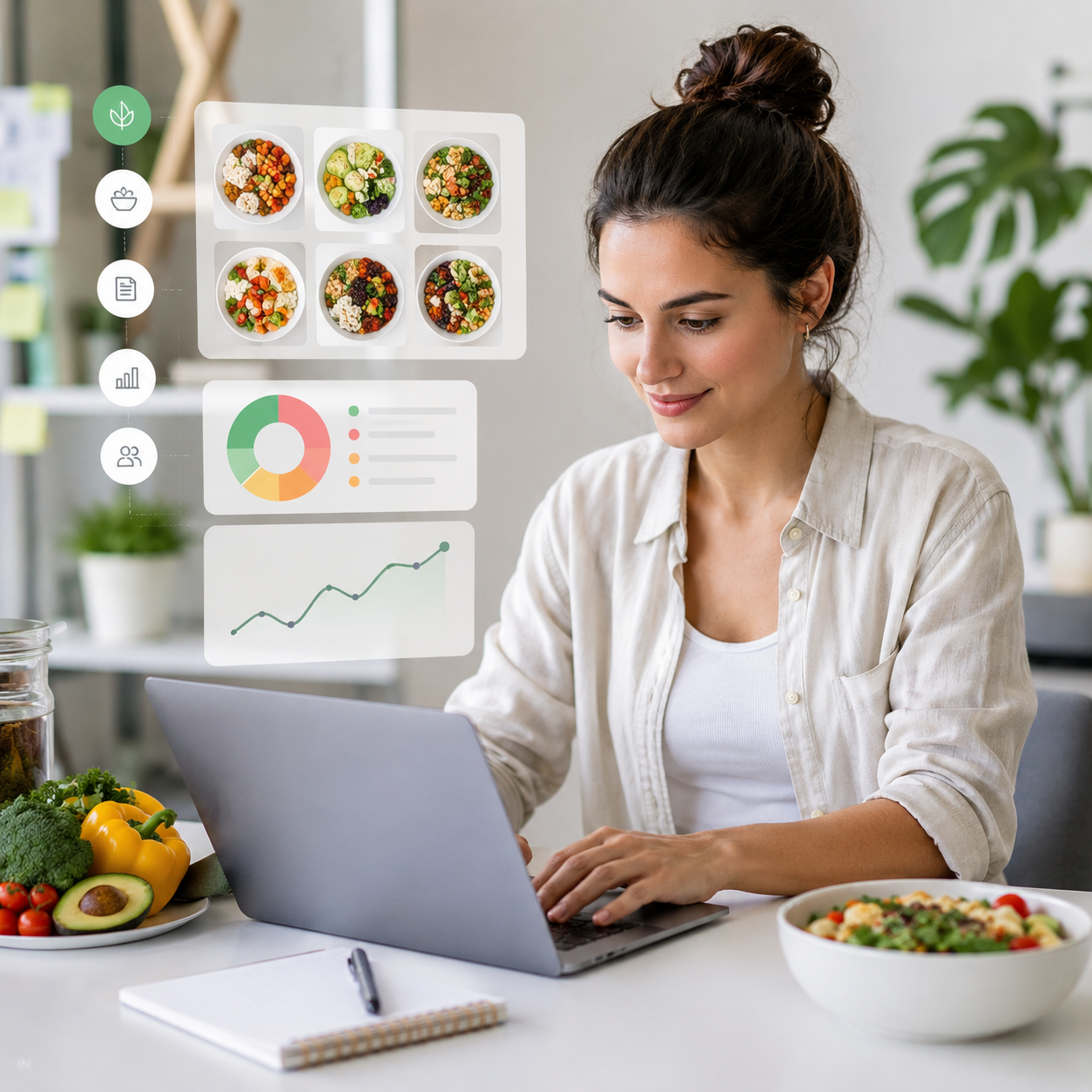
Step 1: Audit Your Current Position and Audience Needs
Objective: Identify the specific gap between what you currently offer and what would make your audience pay for (and stay loyal to) your brand.
Start by cataloging your existing content and offerings. What formats do you use? Blog posts, social media, YouTube, email newsletters, downloadable PDFs? Now ask: which of these create lasting engagement versus one-time views? Most creators discover that their content generates attention but not retention. A recipe post gets views on Tuesday and is forgotten by Thursday.
Next, survey your audience directly. Use Instagram polls, email questionnaires, or comment prompts to understand what they struggle with. The answers almost always cluster around the same themes: "I don't know what to cook each week," "I can't stick to a plan," and "I want something organized that I can just follow." These are product problems, not content problems.
Audit your competitors too. Look at what the top 10 creators in your niche offer beyond free content. If most of them are still distributing static PDFs or linking to generic apps, that's your opening. If some have launched branded apps, study their approach and identify what they're missing (personalization, community features, better design).
Anti-patterns to avoid: Don't skip this step and jump straight to building. Many creators launch meal plans based on what they think is cool rather than what their audience actually needs. Don't assume your audience mirrors your own preferences.
Success indicators: You can articulate, in one sentence, the specific unmet need your audience has. You've identified at least three competitors and mapped their offerings. You have direct audience feedback (not assumptions) guiding your next move.
Step 2: Design Your Branded Meal Planning Experience
Objective: Architect a product that reflects your unique brand identity and solves the specific problem you identified in Step 1.
This is where nutrition software becomes your strategic advantage. Instead of hiring developers or wrestling with code, you need a platform that lets you focus on what you do best: curating great food content and building community. The design phase should answer three questions: What plans will you offer? How will they be structured? What makes them unmistakably yours?
Start with your content pillars. If your brand is built around quick weeknight dinners, your meal plans should reflect that. If you're known for high protein meal plans or heart healthy diets, lean into that specialization. Specificity builds authority. A "meal plan for busy parents who want plant-based dinners under 30 minutes" is infinitely more compelling than a generic weekly menu.
Consider the user experience carefully. Your audience wants meal planning made easy: clear daily layouts, automated shopping lists, the ability to swap recipes, and mobile-friendly access. These aren't nice-to-haves. They're the features that determine whether someone uses your product once or becomes a loyal subscriber.
For creators who've been distributing static PDFs, this step often involves migrating from PDF meal plans to an interactive app experience. The difference in perceived value is dramatic. A PDF feels like a freebie. A branded app feels like a premium product.
Anti-patterns to avoid: Don't try to be everything to everyone. A plan that covers keto, vegan, paleo, and Mediterranean simultaneously serves no one well. Don't over-engineer your first version either. Launch with one focused offering and expand based on data.
Success indicators: You have a clear product concept with defined meal plan themes, a structure (weekly, monthly, or rolling), and a brand-consistent visual identity. You can describe your product in a way that immediately communicates its value to your target audience.
Step 3: Choose the Right Platform and Launch Without Technical Debt
Objective: Get your branded product live without the cost, complexity, or delays of custom development.
This is where many creators stall. The instinct is to hire a developer or agency to build a custom app. The reality is that custom app development is prohibitively expensive and slow for most independent creators. Budgets of $30,000 to $100,000+ and timelines of 6 to 12 months are common, and that's before ongoing maintenance costs.
A smarter approach is to use a white-label meal planning SaaS platform that handles the technical infrastructure while letting you own the brand experience. Member Kitchens, for example, lets you launch a fully branded meal planning app in minutes with no coding required, complete with automated shopping lists and expert-designed layouts. This eliminates the technical barrier so you can focus on content curation and community building.
When evaluating platforms, prioritize these criteria: brand customization (does it look like yours, not theirs?), user experience quality, the ability to update and add plans easily, and integration with your existing membership or website. If you already run a membership site, explore how to embed meal planning into your membership website for a seamless experience.
Anti-patterns to avoid: Don't chase the cheapest option. Your product is a brand extension, and a clunky or generic-looking tool undermines the authority you're trying to build. Also, don't spend months in "research mode" comparing every platform. Set a decision deadline and commit.
Success indicators: Your branded product is live and accessible to your audience. The experience feels cohesive with your existing brand. You launched within weeks, not months.
Step 4: Integrate Your Product into Your Content Ecosystem
Objective: Make your meal planning product a natural extension of your content, not a disconnected upsell.
The biggest mistake creators make after launching a digital product is treating it as a separate entity from their content. Your meal planning app should be woven into everything you already do. When you post a recipe on Instagram, reference how it fits into this week's plan. When you publish a blog post about nutrition goals tracking, link it to the structured plans available in your app.
Create a content flywheel: your free content (social posts, blog articles, YouTube videos) demonstrates your expertise and gives a taste of your approach. Your product (the branded meal planning app) delivers the complete, organized experience. Each piece of free content should naturally point toward the product without feeling like a hard sell.
Email marketing is particularly effective here. A weekly email previewing the upcoming meal plan, sharing a single recipe from it, or highlighting a subscriber success story creates anticipation and reinforces the value of the paid product. This approach also gives you a consistent content calendar, solving the "what should I post?" problem that plagues many creators.
Consider tiered access as well. Offer a free sample plan to demonstrate quality, then gate the full library behind a subscription. This lowers the barrier to trial and lets your product sell itself through experience rather than persuasion.
Anti-patterns to avoid: Don't make every piece of content a sales pitch. The ratio should be roughly 80% value-driven content, 20% product-aware content. Don't hide your product either. If people don't know it exists, they can't buy it. Find the balance between visibility and pressure.
Success indicators: Your audience mentions your meal plans organically in comments and DMs. You see a steady conversion rate from free content consumers to paid subscribers. Your content creation feels easier because the product gives you a built-in editorial calendar.
Step 5: Use Your Product as a Content Engine and Authority Signal
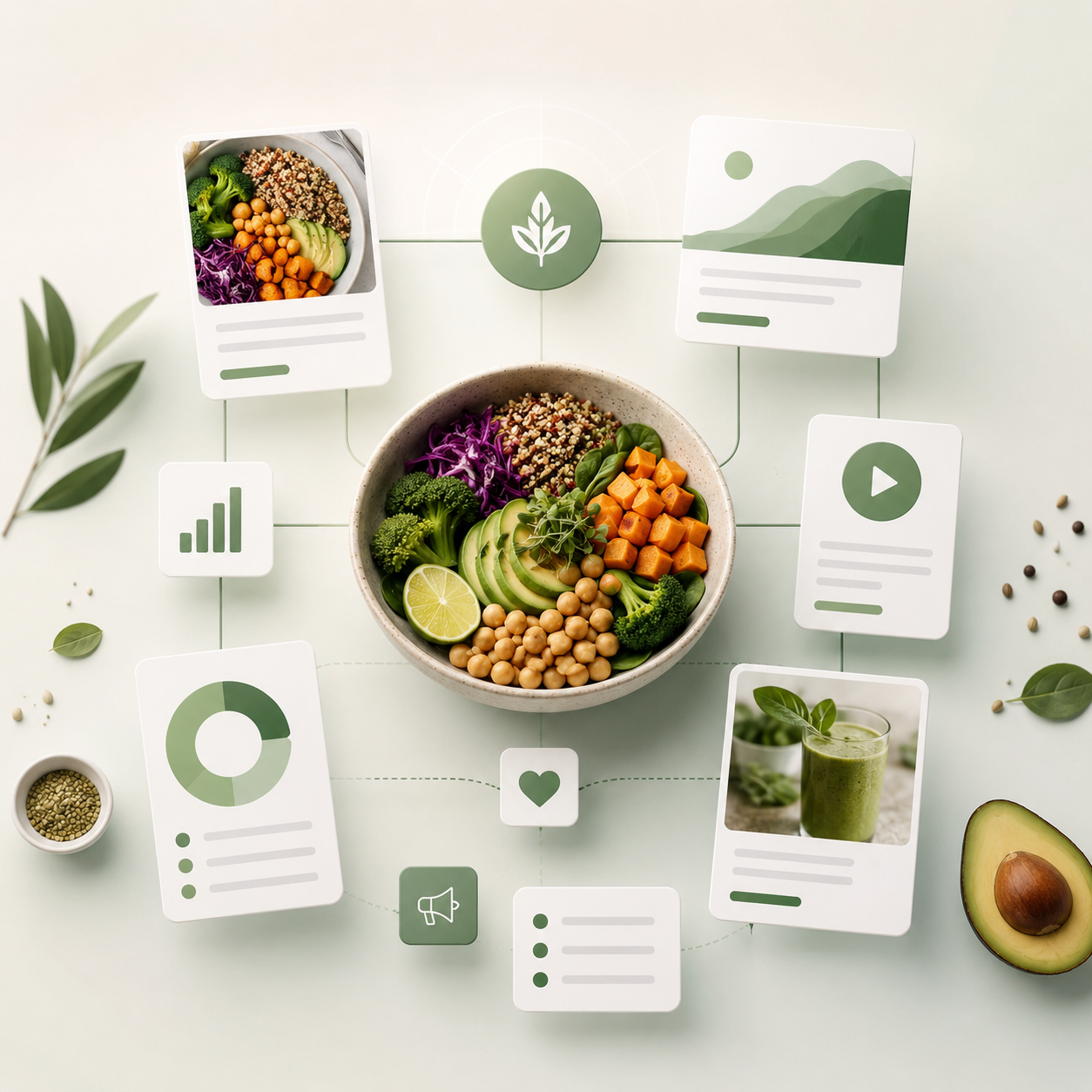
Objective: Transform your product from a revenue stream into a compounding authority asset.
Here's where the strategy becomes self-reinforcing. A branded meal planning app generates data and stories you can't get from content alone. Subscriber feedback, popular recipe trends, completion rates, and testimonials all become raw material for high-authority content.
Share anonymized insights: "Our subscribers' most-requested dinner category this month was 30-minute high-protein meals." This positions you as someone with real audience data, not just opinions. It's the difference between saying "I think people want quick meals" and "Our data shows 73% of our subscribers prioritize prep time over ingredient variety."
Collaborate with other professionals. Invite registered dietitians to contribute dietitian designed meal plans to your app. This adds credibility, diversifies your content, and creates cross-promotion opportunities. Each collaboration reinforces your authority because you're curating expertise, not just creating content.
Leverage your product for media opportunities too. Journalists and podcast hosts are far more interested in interviewing "the creator behind a meal planning app with X thousand subscribers" than "a food blogger with Y followers." A product gives you a tangible story to tell.
Anti-patterns to avoid: Don't fabricate data or overstate your reach. Authenticity is the foundation of authority. Don't neglect the product experience in favor of marketing. If your plans are outdated or poorly organized, no amount of promotion will sustain growth.
Success indicators: You're being cited or referenced by peers and media as an authority in your niche. Your product generates organic word-of-mouth referrals. You have a growing library of testimonials and user stories.
Step 6: Iterate Based on Data, Not Assumptions
Objective: Build a continuous improvement loop that keeps your product and brand ahead of competitors.
Authority isn't a destination. It's a position you maintain through consistent evolution. Use your platform's analytics to understand what's working: which meal plans get the most engagement, where subscribers drop off, what recipes are saved most often, and what feedback appears repeatedly.
Schedule a monthly review. Look at subscriber growth, churn rate, and engagement metrics. Compare these against your content performance. Often, you'll find direct correlations: a viral Instagram post about a specific recipe drives a spike in app sign-ups, telling you exactly what type of content to create more of.
Don't be afraid to retire underperforming plans and double down on what resonates. The nutrition apps market is expected to reach $17.4 billion by 2035, which means audience expectations will continue rising. What felt premium last year may feel standard next year. Stay ahead by listening to your users and evolving your offering.
Test pricing, packaging, and positioning regularly. A quarterly meal plan challenge might outperform a monthly subscription for your specific audience. A family-focused plan might attract a segment you hadn't considered. Let data guide these decisions.
Anti-patterns to avoid: Don't change everything at once. Isolate variables so you can understand what's driving results. Don't ignore negative feedback or dismiss churn as inevitable. Every lost subscriber is a data point.
Success indicators: Your subscriber retention rate improves over time. You can predict which types of content and plans will perform well. Your product roadmap is driven by user data, not guesswork.
Practical Examples: Authority in Action
Scenario A: The Recipe Blogger Stuck in Content Mode
A food blogger with 50,000 Instagram followers publishes three recipes per week. Engagement is decent but declining. Revenue comes from sporadic sponsorships and a small Amazon affiliate income. She sells a PDF meal plan ebook for $12 that generated initial sales but has flatlined.
After auditing her audience, she discovers her followers' top frustration is organizing weekly dinners around dietary restrictions (gluten-free for one family member, nut-free for another). She designs a branded meal planning app focused on "family-friendly dinners with built-in swaps for common allergies." Within three months, she has 400 paying subscribers at $9.99/month, generating nearly $4,000 in recurring monthly revenue, far exceeding her sponsorship income.
More importantly, her authority shifts. She's no longer "a food blogger." She's "the creator behind the allergy-friendly family meal planning app." Podcast invitations and brand partnership offers increase because she now has a product story, not just a content portfolio.
Scenario B: The Fitness Influencer Expanding Into Nutrition
A fitness trainer with a strong YouTube following wants to add nutrition guidance to his offerings but lacks formal nutrition credentials. He partners with a registered dietitian to create custom meal plans aligned with his workout programs (bulking, cutting, maintenance phases).
Using a no-code platform, he launches a branded app where subscribers get workout-paired meal plans with automated shopping lists. The dietitian provides nutritional accuracy. He provides the brand, audience, and fitness context. The collaboration elevates both their authorities: he gains nutrition credibility, and she gains access to a large, engaged audience she couldn't reach alone.
Common Mistakes and Pitfalls
Launching without a clear niche. "Healthy meal plans" is not a niche. "30-minute Mediterranean dinners for couples" is. Specificity is what cuts through saturation.
Treating the app as a set-it-and-forget-it product. Your meal planning product needs fresh content regularly. Subscribers who see the same plans month after month will churn. Treat your product like a living publication, not a static download.
Overinvesting in technology, underinvesting in content quality. The fanciest app in the world won't retain users if the recipes are mediocre or the plans are poorly organized. Technology is the delivery mechanism. Your expertise is the product.
Ignoring community. The most successful meal planning products include some form of community interaction, whether it's a private Facebook group, comment threads within the app, or weekly live Q&A sessions. Community transforms customers into advocates. In fact, brands with active online communities see 53% higher customer retention rates than those without one.
Waiting for perfection. Your first version won't be perfect. Launch with a focused, quality offering and improve iteratively. The creators who build authority fastest are the ones who ship, learn, and adapt.
What to Do Next
You don't need to execute all six steps this week. Start with Step 1: audit your current position and talk to your audience. Send one survey, run one Instagram poll, or simply ask in your next email newsletter: "What's your biggest struggle with weekly meal planning?"
The answers will tell you whether your audience wants what you think they want. From there, sketch out a simple product concept. It doesn't need to be elaborate. One focused meal plan theme, delivered through a branded experience, is enough to begin differentiating yourself.
Revisit this guide as you move through each stage. Use it as a reference, not a checklist. The market will continue evolving, and your approach should evolve with it. The creators who build lasting authority are the ones who treat their brand as a product, not just a presence.
Frequently Asked Questions
What is meal planning software and how does it work?
Meal planning software is a digital platform that lets you create, organize, and distribute structured meal plans. Most platforms include features like recipe databases, automated shopping list generation, nutritional information display, and scheduling tools. For content creators, the most relevant category is white-label or branded platforms that let you deliver plans under your own brand name, either through a web app or mobile app your audience can access directly.
Why should food creators use nutrition software instead of just sharing recipes?
Recipes are individual pieces of content. Meal plans are structured products. When you organize recipes into weekly plans with shopping lists and nutritional context, you're solving a higher-order problem for your audience: "What do I eat this week?" This shift from content to product increases perceived value, justifies subscription pricing, and creates the kind of ongoing engagement that builds authority over time.
Do I need nutrition credentials to offer meal plans?
It depends on your jurisdiction and the nature of your plans. In most cases, curating recipes into organized meal plans (without making specific medical or therapeutic nutrition claims) does not require credentials. However, collaborating with a registered dietitian adds credibility and ensures nutritional accuracy. Many successful creators partner with credentialed professionals while handling the brand, design, and community aspects themselves.
Which features should I look for in meal planning software?
Prioritize brand customization (your logo, colors, and domain), automated shopping lists, mobile-friendly design, easy recipe and plan management, and the ability to update content regularly. If you run a membership site, integration or embedding options are important. Avoid platforms that prominently display their own branding over yours, as this undermines the authority you're trying to build.
How much does it cost to launch a branded meal planning app?
Custom app development typically ranges from $30,000 to $100,000+ with ongoing maintenance costs. White-label and no-code platforms dramatically reduce this, often to a monthly subscription fee. The right choice depends on your budget, timeline, and technical comfort, but most independent creators find that no-code solutions offer the best balance of speed, cost, and brand control.
How can a meal planning product help me stand out in a saturated market?
A branded meal planning app creates a tangible product experience that most competitors in your niche don't offer. While others share recipes on social media, you're providing an organized, interactive tool that lives on your audience's phone. This structural differentiation is harder to replicate than content, builds stronger audience loyalty, and positions you as a professional brand rather than just another content account.
Sources
https://www.grandviewresearch.com/industry-analysis/diet-nutrition-apps-market-report
https://www.thebusinessresearchcompany.com/report/nutrition-analysis-software-global-market-report
https://memberkitchens.com/blog/pdf-meal-plans-to-interactive-app
https://memberkitchens.com/blog/how-to-embed-meal-planning-into-your-membership-website
https://memberkitchens.com/blog/how-to-make-a-meal-planning-app-without-coding
https://www.metatechinsights.com/industry-insights/nutrition-apps-market-1231
https://www.higherlogic.com/blog/community-impact-customer-retention/