
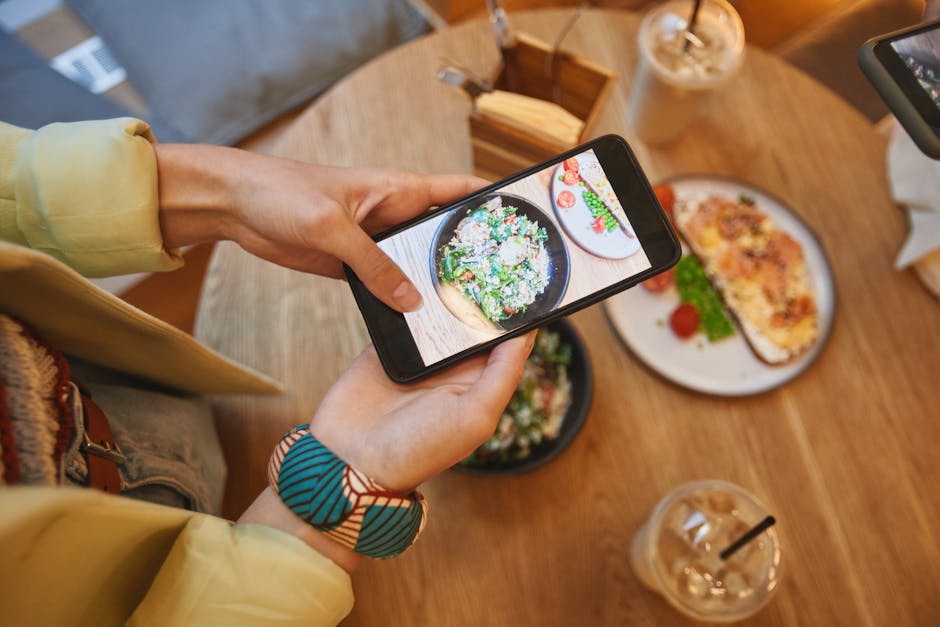
How food creators and wellness influencers can use nutrition software to build scalable, recurring revenue streams
Learn how nutrition software can help you move beyond sponsored content and build digital products like meal plans, branded apps, and memberships. This guide covers practical strategies for turning your audience into sustainable, recurring income.
TL;DR
Sponsored content is becoming less reliable — Tighter brand budgets and audience skepticism mean food creators need owned revenue streams that don't depend on partnerships.
Nutrition software is your product engine — Tools that automate nutrient calculations, meal plan creation, and shopping lists let you build scalable digital products without a development team or manual spreadsheet work.
Start with your audience's problems, not your product idea — Audit your most-engaged content, survey your followers, and build a product that solves a specific problem for a specific group.
Subscriptions and branded apps beat one-time PDFs — Recurring revenue is more predictable, and branded app experiences create stronger retention than static downloads.
Retention matters more than acquisition — Fresh content, community features, and consistent delivery keep subscribers paying month after month. Track your churn rate and act on cancellation feedback.
Guide Orientation: What This Covers and Who It's For
This guide is for food content creators, wellness influencers, and nutrition-focused bloggers who want to build revenue streams that don't depend on brand deals or sponsored posts. If you've ever felt stuck waiting for the next partnership to come through, this is your roadmap out of that cycle.
We'll walk through how nutrition software can become the backbone of a scalable digital product business, helping you create meal plans, branded apps, and membership offerings that generate recurring income. By the end, you'll understand how to shift from trading content for one-time payments to owning a product your audience pays for month after month.
This guide does not cover basic social media growth tactics or how to land sponsorships. It focuses entirely on what comes after you've built an audience and need to monetize it on your own terms.
Why Monetizing Beyond Sponsored Content Matters Now
Sponsored content has been the default revenue model for food creators for years. But the economics are shifting. Brands are tightening budgets, demanding more deliverables per deal, and increasingly favoring micro-influencers who accept lower rates. For mid-tier creators, the math is getting harder.
Meanwhile, audiences are growing more skeptical of sponsored posts. Engagement rates on branded content tend to underperform organic posts, which means every sponsorship carries a subtle cost to your credibility. The more you rely on brand deals, the less your audience trusts your recommendations.
The creators who are pulling ahead are the ones building owned assets: digital products, memberships, and branded tools that generate revenue regardless of whether a brand wants to partner this quarter. Diversifying your monetization as a wellness influencer isn't just smart strategy. It's insurance against a model that's becoming less reliable every year.
The cost of inaction is real. Creators who wait too long to diversify often find themselves in a cycle of content overproduction, chasing algorithm changes and brand timelines instead of building something durable. Nutrition software benefits extend far beyond meal planning; they give you the infrastructure to create, package, and sell your expertise as a product.
Core Concepts: Understanding the Landscape
What "Owned Revenue" Actually Means
Owned revenue is income from products or services you control entirely. Unlike sponsorships (where a brand sets the terms, timeline, and payment) or affiliate commissions (where you earn a percentage of someone else's sale), owned revenue comes from something you built. Digital meal plans, subscription apps, coaching memberships, and recipe libraries all qualify.
The distinction matters because owned revenue compounds. A meal planning subscription you launch today can still generate income next year without additional negotiation or content creation.
The Role of Nutrition Software in Product Creation
Many creators assume that building a digital nutrition product requires a development team, a nutritionist on retainer, or months of manual spreadsheet work. Nutrition professionals software has evolved to eliminate most of those barriers. Platforms like Nutritics consolidate recipe management, nutritional analysis, meal planning, and menu publishing into a single workflow. Trustwell's Food Processor supports diet analysis, exercise tracking, and menu planning for broader client education.
The key insight: nutrition software turns your recipes and expertise into structured, reliable data. That data becomes the raw material for digital products your audience will pay for.
The Identity Shift: Creator to Product Owner
This is the piece most guides skip. Moving beyond sponsored content isn't just a business decision. It's an identity shift. You stop being "a creator who sometimes sells things" and become "a creator who owns a product." That shift changes how you think about content (it becomes marketing for your product), how you think about your audience (they become potential customers), and how you think about your time (it becomes an investment in something you own).
The Framework: From Content to Commerce
The process of building owned revenue as a food creator follows a five-stage path. Each stage builds on the previous one, and skipping stages typically leads to products that don't sell or audiences that don't convert.
Stage 1: Audit Your Expertise — Identify what you know that your audience would pay for.
Stage 2: Choose Your Product Format — Decide whether you're building a one-time product, a subscription, or a hybrid.
Stage 3: Build With Software, Not Spreadsheets — Use nutrition software to create professional, scalable products.
Stage 4: Brand and Package — Turn your product into a branded experience your audience recognizes.
Stage 5: Launch, Learn, and Iterate — Get it in front of people, collect feedback, and improve.
These stages aren't strictly linear. You'll revisit earlier stages as you learn what your audience actually wants. But this sequence gives you a reliable starting point.
Step-by-Step: Building Your Nutrition Software-Powered Revenue Stream
Step 1: Audit Your Expertise and Audience Demand
Objective: Identify the intersection of what you know deeply and what your audience actively asks for.
Start by reviewing your most-saved, most-shared, and most-commented content from the past six months. These engagement signals reveal what your audience values enough to act on, not just scroll past. Look for patterns: Are people saving your high-protein breakfast ideas? Asking about meal prep for dietary restrictions? Requesting budget-friendly family dinners?
Next, survey your audience directly. Use Instagram Stories polls, email surveys, or community threads to ask: "What's your biggest challenge with [eating healthy / meal planning / managing macros]?" The language your audience uses in their responses becomes the language of your product marketing.
Anti-patterns to avoid: Don't build a product based on what you want to teach. Build it based on what your audience wants to solve. Creators who skip audience research often spend months building something nobody asked for. Also avoid trying to serve everyone. A meal plan for "anyone who wants to eat better" competes with millions of free resources. A meal plan for "busy parents managing a child's food allergies" has a clear, underserved market.
Success indicators: You can articulate your product idea in one sentence that names a specific audience and a specific problem. You have at least 20 to 30 audience responses confirming the problem is real and worth paying to solve.
Step 2: Choose Your Product Format
Objective: Select a product structure that matches your audience's needs and your capacity to deliver.
Food creators typically have three viable product formats for nutrition-based offerings:
One-time digital products — Recipe ebooks, single meal plan downloads, or cooking guides. Low maintenance, but revenue stops when sales stop.
Subscription products — Weekly or monthly meal plans, ongoing recipe libraries, or membership communities. Higher maintenance, but recurring revenue creates predictability.
Branded app experiences — A dedicated app with your name, your recipes, and features like automated shopping lists and personalized meal plans. The highest perceived value and strongest retention.
The decision framework here is simple: if you have fewer than 5,000 engaged followers, start with a one-time product to validate demand. If you have a proven audience that regularly engages with your nutrition content, a subscription or branded app will generate more revenue per follower over time.
Anti-patterns to avoid: Don't default to PDFs because they seem easy. Static meal plan PDFs carry hidden costs that erode your audience experience and limit your ability to scale. They can't be updated, they don't adapt to dietary preferences, and they offer no built-in retention mechanism.
Success indicators: You've selected a format that aligns with your current audience size, your content production capacity, and your revenue goals for the next 12 months.
Step 3: Build With Nutrition Software, Not Spreadsheets
Objective: Use professional tools to create accurate, scalable nutrition products efficiently.
This is where nutrition software benefits become tangible. Instead of manually calculating macros in a spreadsheet (error-prone, time-consuming, impossible to scale), you use purpose-built tools that automate the hard parts.
The USDA maintains a list of 15+ approved nutrient analysis software programs, which underscores how central software is to reliable nutrition data. For content creators, this matters because your audience trusts you to provide accurate information. Software like Nutritionist Pro supports both back-office analysis and customer-facing digital products, while FlexiBake automates nutritional calculations and simplifies compliance for labeling.
For creators who want to go beyond analysis and actually deliver a branded product, platforms like Member Kitchens let you launch a fully branded meal planning app without writing code. You focus on the recipes and content; the platform handles the technology, automated shopping lists, and user experience. This is particularly relevant if you've chosen the subscription or branded app format in Step 2.
Anti-patterns to avoid: Don't try to build custom software from scratch unless you have a six-figure budget and a year to wait. Also avoid cobbling together five different free tools. The time you spend managing integrations is time you're not spending on content or community. Building a meal planning app without coding is now a realistic option that saves months of development.
Success indicators: You have a working prototype or first version of your product built using professional nutrition software. Nutrient data is accurate, recipes are organized, and the product can be delivered to customers without manual intervention for each sale.
Step 4: Brand and Package Your Product
Objective: Transform your nutrition product into a branded experience that feels like a natural extension of your content.
Your audience follows you, not a generic meal plan. The packaging of your product needs to reflect your voice, your aesthetic, and your approach to food. This is what separates a $9 ebook from a $29/month membership: perceived value driven by brand identity.
Start with naming. Your product name should be distinct from your social handle but clearly connected to your brand. Avoid generic names like "Healthy Meal Plans" in favor of something that carries your personality ("The [Your Name] Kitchen," "[Brand] Weekly Plates," etc.).
Design consistency matters. Use your existing brand colors, fonts, and photography style across your product. If your Instagram is warm and earthy, your meal plan app shouldn't look clinical and sterile. This visual continuity builds trust and reduces the cognitive gap between "following you for free" and "paying for your product."
Write product descriptions that lead with the transformation, not the features. "Get 4 weeks of macro-balanced dinners your kids will actually eat" outperforms "28 recipes with full nutritional breakdowns" every time. Features support the purchase decision; the transformation drives it.
Anti-patterns to avoid: Don't over-invest in branding before you've validated the product. A beautiful product nobody wants is still a failed product. Get version one out with "good enough" branding, then refine based on customer feedback. Also avoid copying another creator's brand language. Your audience chose you for a reason.
Success indicators: Your product looks and feels like it belongs alongside your existing content. A follower encountering it for the first time would immediately recognize it as yours.
Step 5: Launch to Your Existing Audience First
Objective: Generate initial sales and feedback from the people who already trust you.
Your first customers should come from your existing audience. They already know your content, trust your expertise, and are most likely to forgive early imperfections. Do not spend money on ads for your first launch.
Build anticipation over two to three weeks before launch. Share behind-the-scenes content about the product creation process. Show screenshots, share the "why" behind the product, and invite your audience into the story. People buy products they feel connected to.
On launch day, make the offer clear and simple. One product, one price, one call to action. Remove friction wherever possible: direct links in bio, swipe-up stories, pinned posts. If you're launching a subscription, consider offering a free trial or a founding-member discount to reduce the risk for early adopters.
After the first 50 to 100 customers, collect structured feedback. What do they love? What's confusing? What's missing? This feedback is more valuable than any amount of pre-launch market research because it comes from people who actually paid.
Anti-patterns to avoid: Don't launch silently with a single post and assume people will find it. The average social media post reaches a fraction of your followers. Plan for at least 10 to 15 pieces of launch content across multiple formats (stories, posts, emails, lives). Don't discount so aggressively that you attract bargain hunters instead of committed users.
Success indicators: You've made your first sales within the first week. You have qualitative feedback from at least 10 customers. You know what to improve for version two.
Step 6: Build Retention, Not Just Acquisition
Objective: Keep customers engaged long enough for your product to become a habit.
For subscription products, retention is where the real money is. Acquiring a new customer costs significantly more (in time and effort) than keeping an existing one. Your product needs to deliver ongoing value that justifies the recurring payment.
Fresh content is the most reliable retention lever. If you're running a meal plan subscription, new recipes or weekly plans need to arrive on a predictable schedule. Nutrition software makes this sustainable by automating the tedious parts (nutrient calculations, shopping list generation, formatting) so you can focus on recipe development and community engagement.
Community features also drive retention. A private group, weekly Q&A sessions, or live cooking demos give subscribers a reason to stay beyond the content itself. They're paying for access to you and to a group of like-minded people, not just for recipes they could find elsewhere.
Track your churn rate (the percentage of subscribers who cancel each month). If it's above 10%, something in your product experience needs attention. Common culprits: stale content, poor onboarding, or a mismatch between what was promised and what's delivered.
Anti-patterns to avoid: Don't ignore cancellations. Every churned subscriber is a data point. Send a brief exit survey to understand why they left. Don't try to retain people by making it hard to cancel; this breeds resentment and negative word-of-mouth.
Success indicators:Monthly churn is below 8%. Subscribers are engaging with new content within the first 48 hours of release. You're receiving unsolicited positive feedback or referrals.
Practical Examples: What This Looks Like in Action
Scenario A: The Recipe Blogger With 15,000 Instagram Followers
A food blogger known for plant-based weeknight dinners notices that her "meal prep" content consistently outperforms everything else. She surveys her audience and confirms that 60% of respondents struggle with planning meals for the week ahead. She builds a weekly meal plan subscription using nutrition software to automate macro calculations and shopping lists, then launches it at $12/month to her email list of 3,000 subscribers.
With a 3% conversion rate, she starts with 90 paying subscribers ($1,080/month). After six months of consistent delivery and community building, she's at 250 subscribers ($3,000/month) with a 6% monthly churn rate. This revenue is more predictable than any sponsorship deal she's ever landed, and it grows as her audience grows.
Scenario B: The Fitness Coach Transitioning From 1:1 Clients
A fitness coach with 8,000 YouTube subscribers and 20 active 1:1 clients is maxed out on time. He can't take more clients, but his audience keeps asking for nutrition guidance. He uses a white-label nutrition software platform to launch a branded app with automated meal plans tailored to different fitness goals (muscle gain, fat loss, maintenance). He prices it at $19/month, positioning it as "coaching in your pocket."
The app handles what he used to do manually for each client: personalized meal plans, dietary restrictions management, and shopping lists. His monetization as a food content creator shifts from trading hours for dollars to earning from a scalable digital product.
Common Mistakes and Pitfalls
Perfectionism before launch. Many creators spend months refining a product nobody has seen. Ship version one with 80% quality and iterate based on real feedback. Your first version will never be your best version.
Underpricing out of fear. Creators often price products too low because they're uncomfortable charging their audience. Remember: your audience is paying for the transformation, not just the content. A well-structured meal plan that saves someone three hours a week is worth far more than $5.
Ignoring the business side. Tracking revenue, churn, customer acquisition cost, and lifetime value isn't optional. You don't need a finance degree, but you do need a spreadsheet and 30 minutes a week to review your numbers.
Trying to do everything at once. One product, one audience segment, one launch. Expand after you've proven the model works. Creators who launch three products simultaneously usually end up with three mediocre products instead of one great one.
What to Do Next
Start with the audit. This week, review your top 20 most-saved or most-shared posts and write down the patterns you see. Then ask your audience one question: "What's your biggest challenge with [the topic you're known for]?" The answers will tell you what to build.
You don't need to have everything figured out before you begin. The creators who succeed at this aren't the ones with the best ideas on day one. They're the ones who start, learn from their first 50 customers, and keep improving. Treat this guide as a reference you return to at each stage, not a checklist you complete once.
The shift from sponsored content to owned revenue takes time. But every step you take builds an asset that appreciates, rather than a post that disappears from the feed in 48 hours.
Frequently Asked Questions
What is a Meal Planning SaaS and how does it work?
A Meal Planning SaaS (Software as a Service) is a cloud-based platform that lets you create, manage, and deliver meal plans digitally. Instead of installing software on your computer, you access it through a browser or app. These platforms typically handle recipe management, nutritional analysis, shopping list generation, and content delivery to your audience or clients. You pay a monthly or annual subscription, and the provider handles all technical maintenance and updates.
Why should nutrition professionals use specialized software for meal planning?
Specialized nutrition professionals software automates the most time-consuming parts of meal planning: nutrient calculations, portion adjustments for dietary restrictions, and shopping list generation. Manual methods (spreadsheets, PDFs) are error-prone and don't scale. The USDA maintains a list of approved nutrient analysis software specifically because accurate nutritional data requires reliable tools. For creators and coaches, this accuracy builds audience trust and reduces liability.
How can I scale my nutrition services using SaaS solutions?
SaaS solutions let you serve hundreds or thousands of customers with the same effort it previously took to serve a handful. Instead of creating individual meal plans for each client, you build templated plans that adapt to user preferences (dietary restrictions, calorie targets, ingredient swaps). Automated delivery, shopping lists, and in-app updates replace manual emails and PDF attachments. This shift from 1:1 service delivery to 1:many product delivery is what makes scaling possible.
When is the right time to switch from spreadsheets to nutrition software?
If you're spending more than two hours per week on manual nutrient calculations, formatting meal plans, or responding to individual client requests about substitutions, you've outgrown spreadsheets. Another signal: if you're turning away potential customers because you don't have the capacity to serve them. Nutrition software doesn't just save time on existing work; it unlocks revenue you're currently leaving on the table.
Which features are essential in a Meal Planning SaaS for nutrition coaches?
At minimum, look for automated nutritional analysis, recipe management, dietary restrictions management, shopping list generation, and a client-facing delivery method (app, web portal, or email). For creators specifically, branding customization is critical. Your product should look and feel like yours, not like a generic template. Subscription management and analytics (so you can track engagement and churn) round out the essentials.
Can I really build a branded meal planning app without coding experience?
Yes. No-code and white-label platforms have made this accessible to non-technical creators. Platforms like Member Kitchens let you launch a fully branded app with your name, your recipes, and features like automated shopping lists, without writing a single line of code. The trade-off is that you have less control over custom features compared to a fully custom-built app, but for the vast majority of creators, the standard feature set covers everything their audience needs.
Sources
https://www.trustwell.com/products/food-processor-nutrition-analysis-software/
https://memberkitchens.com/updates/hidden-cost-static-meal-plan-pdfs
https://www.fns.usda.gov/tn/usda-approved-nutrient-analysis-software
https://www.flexibake.com/feature/nutritional-analysis-software/
https://memberkitchens.com/updates/how-to-make-a-meal-planning-app-without-coding